How to Spot Closing Disclosure Changes Before You Sign
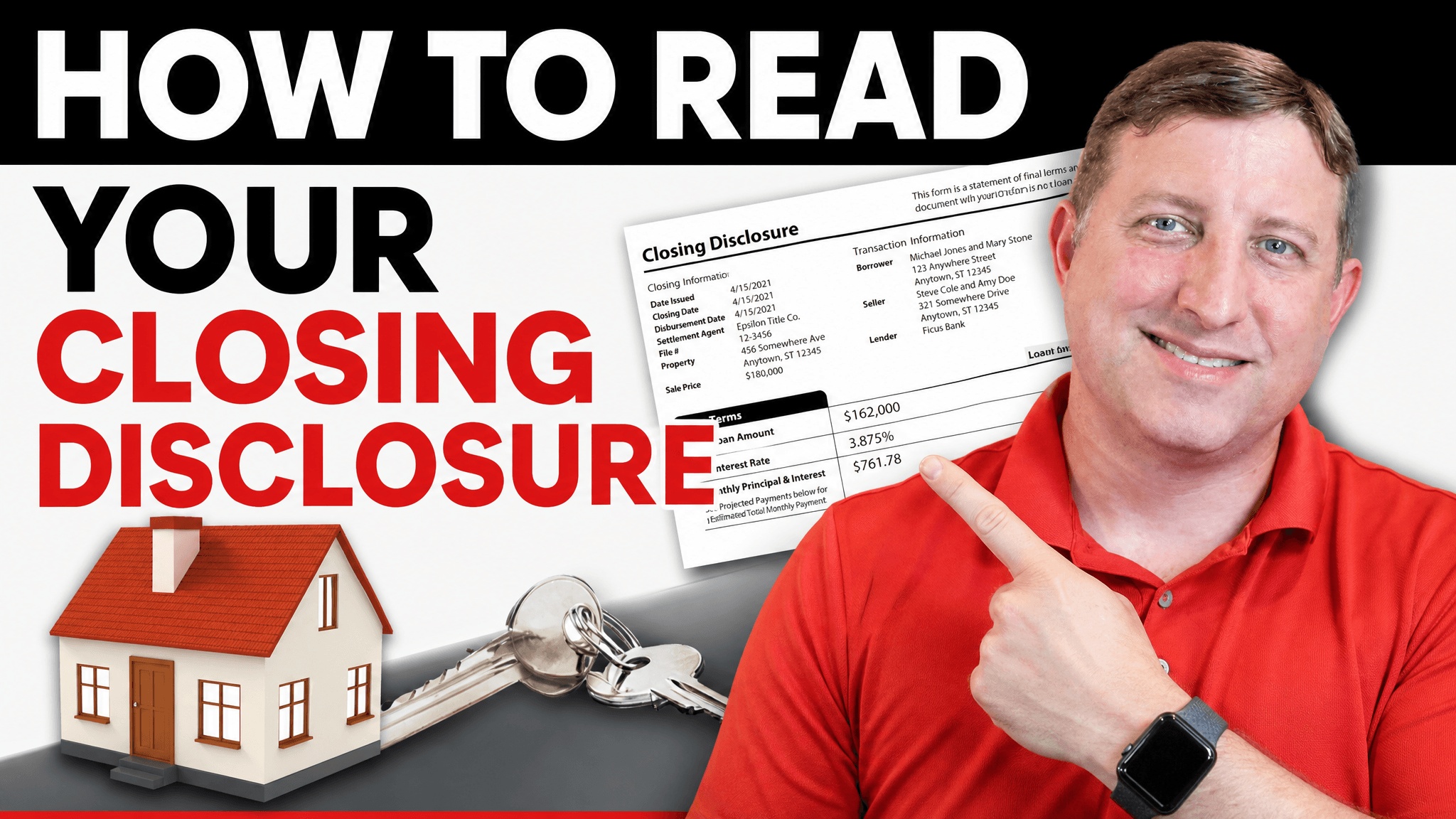
Your Closing Disclosure arrives a few days before closing, and several numbers will usually differ from your Loan Estimate.
Closing Disclosure changes can come from a final tax figure, an updated insurance premium, or a lender fee that went up without a valid reason.
Federal rules decide which Closing Disclosure changes a lender can make, which ones require a refund, and which ones restart the waiting period before you sign.
When you compare the two documents line by line, you can see where each difference came from and ask questions before you reach the closing table.
⚖️ Loan Estimate vs Closing Disclosure
The Loan Estimate gives you the lender’s good faith estimate of your loan terms and closing costs.
The lender has to deliver or mail it no later than the third business day after receiving your application.
For this rule, your application is complete once you submit six pieces of information:
- Your name
- Your income
- Your Social Security number so the lender can pull your credit report
- The property address
- An estimate of the property’s value
- The loan amount you want
The Closing Disclosure shows the actual terms of your loan and your final closing figures.
You must receive it no later than three business days before consummation, which is the moment you become contractually obligated on the loan.
Why Closing Disclosure Changes Happen
The Loan Estimate relies on information the lender has early in the process, and several figures only become final as your closing date approaches.
Prepaid interest depends on the exact closing date, and your homeowners insurance premium may not be final until you choose a policy.
Property taxes are a common source of Closing Disclosure changes.
In Dallas County and Collin County, the central appraisal district sets each property’s value, and each local taxing entity adopts its own tax rate.
Final tax information can shift both the tax figures and the escrow deposit on your Closing Disclosure.
In Texas, the Texas Department of Insurance publishes the basic premium rates for title insurance, and its chart sets each basic premium by the policy amount.
The current chart took effect March 1, 2026. If the basic title premium moved between your two documents, ask the lender what changed in the policy amount.
🔍 The Three Tolerance Categories
Most Closing Disclosure changes fall into one of three federal tolerance categories, and each category limits how much a charge can rise.
1. Charges That Can’t Increase
Under the general rule, a charge on your Closing Disclosure can’t exceed the amount first disclosed on your Loan Estimate.
This category includes lender fees, third-party services paid to a lender affiliate, and services the lender required without letting you shop for the provider.
Points and lender credits can change when your rate wasn’t locked at the time of the Loan Estimate.
Once you lock, the lender has three business days to send you a revised Loan Estimate showing the new rate, points, and lender credits.
2. Charges With a 10% Combined Limit
This category covers recording fees and third-party services when the lender lets you shop, you choose a provider from the lender’s written list, and that provider isn’t the lender or a lender affiliate.
Individual fees in the group can rise or fall, and the combined total can grow by up to 10% over the Loan Estimate amount.
For example, if these charges totaled $2,000 on your Loan Estimate, the combined total on your Closing Disclosure can reach $2,200.
A combined total of $2,300 goes $100 past the limit unless a valid changed circumstance applies.
3. Charges With No Set Limit
Some charges can rise by any amount, as long as the original estimate matched the best information reasonably available to the lender at the time.
This group includes:
- Prepaid interest
- Homeowners insurance premiums
- Deposits into your escrow account
- Services from a provider you chose who wasn’t on the lender’s list
- Property taxes and services the lender doesn’t require
A charge in this group still has to reflect a real service.
As a general rule, the amount you pay for a settlement service can’t exceed what the provider actually received for it.
What Happens When a Charge Goes Over the Limit
If a charge exceeds what these rules allow, the lender has to refund the excess to you no later than 60 days after consummation.
The lender must also deliver or mail a corrected Closing Disclosure showing that refund within the same 60 days.
A refund corrects the overcharge after closing, and catching the issue before you sign gives you the chance to ask questions while the file is still open.
✅ Valid Reasons for a Revised Loan Estimate
A lender can measure these limits against a revised estimate only when one of the reasons in the federal rule applies:
- An extraordinary event beyond anyone’s control, or another unexpected event specific to you or the transaction
- Information the lender relied on that turns out to be inaccurate or changes after the Loan Estimate
- New information about you or the transaction that the lender didn’t rely on originally
- A change in your creditworthiness or the property’s value that makes you ineligible for a charge on the Loan Estimate
- A change you request to the loan terms or the settlement
- A rate lock when your rate wasn’t locked at the time of the Loan Estimate
- An intent to proceed that comes more than 10 business days after the Loan Estimate, or after a longer deadline the lender stated
- A delayed settlement on a new construction loan when the original Loan Estimate warned you about possible revisions
The lender has to provide the revised Loan Estimate within three business days of learning about the change.
The lender can’t issue a revised Loan Estimate on or after the day it provides the Closing Disclosure, and you must receive any revised Loan Estimate at least four business days before consummation.
Compare your Closing Disclosure with your most recent valid Loan Estimate, since the latest revision sets the baseline for these limits.
Which Closing Disclosure Changes Restart the Clock
Most Closing Disclosure changes only require a corrected disclosure that you receive at or before consummation.
Three changes require a new three-business-day waiting period:
- The APR becomes inaccurate.
- The loan product changes.
- The lender adds a prepayment penalty.
As a general rule, a disclosed APR stays accurate when it falls within 1/8 of a percentage point of the actual APR.
An irregular transaction, such as one with multiple advances or irregular payment amounts, has a tolerance of 1/4 of a percentage point.
You also have the right to inspect your Closing Disclosure during the business day before consummation, with every item the lender knows at that point filled in.
📆 How Business Days Count
For the Closing Disclosure waiting period, a business day includes every calendar day except Sundays and federal legal public holidays, so Saturdays count.
For the Loan Estimate delivery deadline, a business day means a day the lender’s offices are open to the public for substantially all of its business.
When you don’t receive the Closing Disclosure in person, it counts as received three business days after the lender delivers or mails it.
A Closing Disclosure mailed on a Monday counts as received that Thursday.
With no holidays that week, the earliest consummation date falls on the following Monday.
You can waive or shorten the waiting period only when you need the loan to meet a bona fide personal financial emergency.
The waiver must be a dated written statement describing the emergency, and every borrower primarily liable on the loan must sign it.
The rule prohibits printed waiver forms, so plan your closing timeline around the full waiting period.
Escrow Deposits and Prepaids
Escrow deposits and prepaid interest often account for Closing Disclosure changes because both depend on final dates and figures.
At closing, the lender can collect enough to cover your property taxes and insurance from the last payment date until your first payment date.
The lender can also collect a cushion of no more than one-sixth of your estimated annual escrow payments, which equals about two months.
When the lender requires an escrow account, you receive an initial escrow account statement at closing or within 45 calendar days after closing.
Both items fall in the no-limit category, so for any large change, ask which tax and insurance figures the lender used.
👥 Who Prepares the Closing Disclosure
The lender is responsible for making sure you receive an accurate Closing Disclosure on time.
A settlement agent may prepare and provide it, and the lender still has to make sure it meets every requirement.
Neither the lender nor the servicer can charge you a fee for preparing or delivering the Closing Disclosure.
Questions to Ask About Each Change
Bring these questions to the lender for each of your Closing Disclosure changes:
- Which tolerance category does this charge fall in?
- Which changed circumstance supports the increase, and when did I receive the revised Loan Estimate?
- Did the combined total of third-party services and recording fees rise more than 10%?
- Does this change restart the three-business-day waiting period?
- Will the lender refund any amount that went over the limit?
📄 Closing Disclosure Changes Checklist
- Check the spelling of your name on the Closing Disclosure.
- Confirm the loan term, purpose, product, and loan type match your most recent Loan Estimate.
- Confirm the loan amount matches your most recent Loan Estimate.
- Check your interest rate and whether it was locked.
- Check whether the loan has a prepayment penalty or a balloon payment.
- Compare your estimated total monthly payment with your Loan Estimate.
- Note any property taxes, insurance, or assessments that aren’t in escrow.
- Compare closing costs section by section against the right tolerance category.
- Compare your cash to close with your most recent Loan Estimate.
- Ask the lender to explain each change and the reason behind it.
- Inspect the Closing Disclosure during the business day before consummation if anything changed.
Frequently Asked Questions (FAQs)
Should my Closing Disclosure match my Loan Estimate exactly?
Not necessarily, since the Loan Estimate contains good faith estimates and several costs only become final near closing. Federal tolerance rules limit how much certain charges can rise, so match each change to its category.
How many days before closing do I receive my Closing Disclosure?
You must receive it no later than three business days before consummation. Saturdays count toward this period, and Sundays and federal legal public holidays don’t.
Which Closing Disclosure changes restart the three-day waiting period?
An APR that becomes inaccurate, a change in loan product, or an added prepayment penalty requires a new three-business-day waiting period. Other Closing Disclosure changes only require a corrected disclosure at or before consummation.
Can closing costs go up after the Loan Estimate?
Some closing costs can rise, depending on the tolerance category and whether a valid changed circumstance applies. Lender fees generally can’t increase, and third-party services from providers on the lender’s written list can rise to 10% combined.
What happens if my lender charges more than the rules allow?
The lender has to refund the excess within 60 days after consummation. The lender must also provide a corrected Closing Disclosure showing that refund within the same 60 days.
Can I waive the Closing Disclosure waiting period?
You can waive it only if you need the loan for a bona fide personal financial emergency. You have to give the lender a dated written statement describing the emergency, signed by every borrower primarily liable on the loan.
Why did my escrow deposit change on my Closing Disclosure?
Escrow deposits depend on final property tax and insurance figures, and they fall under charges with no set limit. The lender can also collect a cushion of up to one-sixth of your estimated annual escrow payments.

Wade Betz
Wade has been a stalwart in the mortgage industry since 2006, dedicating himself to helping thousands of families navigate the complexities of home financing. With so much experience, he stands out as a leading mortgage originator in the Dallas-Fort Worth area.
Related Posts