Texas Home Closing Costs: Title Insurance, Fees, and What to Expect
Closing on a home in Texas involves more than signing paperwork.
It involves a specific set of costs, a title process governed by state-regulated rules, and a closing structure that differs from most other states.
Knowing what to expect before the closing date makes the process significantly less stressful.
Texas home closing costs typically range from 2% to 5% of the loan amount, and the exact figure depends on the loan type, the lender, the property location, and the terms negotiated in the contract.
Understanding what makes up that number, how title insurance works in Texas specifically, and who pays for what gives buyers a clearer picture before they sit down at the table.
📍How Closing Works in Texas
In Texas, a title company typically manages the closing process.
The title company serves as the neutral third party that holds funds in escrow, conducts the title search, issues title insurance policies, coordinates the signing of documents, and records the deed with the county after closing.
The general sequence looks like this:
- The buyer’s offer is accepted, and earnest money is deposited with the title company
- The title company begins the title search and opens escrow
- The lender orders an appraisal and moves the file through underwriting
- The buyer receives the Closing Disclosure at least three business days before closing
- The buyer completes a final walk-through of the property
- All parties sign closing documents at the title company
- The lender reviews the signed package and releases funds
- The title company records the deed with the county
- Keys are handed over after the transaction is funded and recorded
In most Texas transactions, the buyer receives keys the same day as closing, but timing depends on when the lender releases funds and when the county records the deed.
What Title Insurance Is and Why Texas Handles It Differently
Title insurance protects against financial loss from defects in a property’s ownership history that existed before closing.
Those defects might include:
- Unpaid liens
- Recording errors
- Forged documents
- Undisclosed heirs
- Ownership disputes that surface after the purchase
Texas is one of a small number of states where title insurance premiums are regulated by the state.
The Texas Department of Insurance sets the rates, which means the premium for a given coverage amount is the same regardless of which title company is used.
Shopping for a lower title insurance rate among companies in Texas will not yield different rates.
What does vary between title companies is service quality, communication, and experience with specific transaction types.
For buyers in North Texas, particularly those navigating VA loans, new construction purchases, or complex closings, choosing a title company with relevant experience matters more than comparing rates.
📋 Two Title Insurance Policies Are Issued At Closing
Owner’s title insurance policy
This policy protects the buyer for the full purchase price and remains in effect as long as the buyer or their heirs hold an interest in the property.
In Texas, the seller customarily pays for the owner’s title policy as part of the transaction.
However, this is a negotiable term of the contract and should be confirmed before signing.
Lender’s title insurance policy
This policy protects the lender’s financial interest up to the loan amount and is required on any transaction involving a mortgage.
The buyer typically pays the lender’s policy as part of the closing costs, and it ends when the mortgage is paid off or refinanced.
Texas Closing Costs Breakdown
Texas home closing costs fall into several categories.
Some are lender fees, some are third-party service fees, and some are prepaid items that fund the escrow account for ongoing homeownership expenses.
Lender fees
These are charges from the mortgage lender for processing and originating the loan:
- Origination fee
- Underwriting fee
- Application or processing fee
- Discount points if the buyer chose to buy down the rate
Third-party service fees
These are charges from providers outside the lender:
- Appraisal fee
- Credit report fee
- Title search fee
- Title insurance premiums for both the owner’s and lender’s policies
- Escrow or settlement fee charged by the title company
- Survey fee if required
- Pest inspection fee if required
Government fees
These are charges from the county or state:
- Recording fees charged by the county to officially record the deed and mortgage
- Transfer taxes where applicable
Prepaid items
These are not closing costs in the traditional sense but are collected at closing to fund ongoing expenses:
- Prepaid interest covering the days between closing and the first mortgage payment
- Homeowners insurance premium or escrow deposit
- Property tax escrow deposit
- HOA dues if applicable
Prepaid items can add a meaningful amount to the total cash needed at closing, particularly when closing early in a month, which results in more days of prepaid interest.
🔍 Who Pays What in a Texas Closing
Texas purchase contracts specify who is responsible for each closing cost, and some items are more customary for the buyer while the seller typically covers others.
Buyer typically pays:
- Lender fees and origination charges
- Appraisal and credit report fees
- Lender’s title insurance policy
- Escrow or settlement fee
- Recording fees
- Prepaid interest, insurance, and tax escrow deposits
Seller typically pays:
- Owner’s title insurance policy
- Real estate agent commissions
- Any liens or judgments on the property that must be cleared at closing
- Their share of property taxes prorated to the closing date
These are customary practices in Texas, not fixed rules.
Every item is negotiable in the purchase contract, and buyers sometimes ask sellers to contribute toward the buyer’s closing costs through seller concessions.
Seller Concessions in Texas
A seller concession is when the seller agrees to cover a portion of the buyer’s closing costs as part of the purchase agreement.
This can reduce the cash a buyer needs to bring to the closing table without changing the loan amount.
Each loan program sets limits on how much a seller can contribute:
- Conventional loans: Up to 3% for buyers putting less than 10% down, up to 6% with a larger down payment
- FHA loans: Up to 6% of the sales price
- VA loans: Up to 4% plus actual closing costs
- USDA loans: Up to 6% of the sales price
Seller concessions must be negotiated in the purchase contract and will appear on the closing disclosure.
They cannot exceed the buyer’s actual closing costs.
💸 How Closing Costs Differ by Loan Type
The base structure of Texas home closing costs is similar across loan types, but several programs carry unique fees that affect the total.
Conventional loans
Standard lender fees, title insurance, and prepaid items apply.
Private mortgage insurance is required when the down payment is below 20% but is paid monthly rather than as a closing cost.
Buyers who pay points to buy down the rate will see that reflected in closing costs.
FHA loans
FHA loans require an upfront mortgage insurance premium equal to 1.75% of the loan amount, which can be financed into the loan or paid at closing.
The monthly mortgage insurance premium is separate and ongoing.
VA loans
VA loans require a funding fee that varies based on the type of service, whether the veteran has used the VA benefit before, and the down payment amount.
The funding fee can be financed into the loan.
VA loans do not require private mortgage insurance.
There are also limits on certain fees a VA buyer can be charged, which means some costs that would normally fall to the buyer may need to be covered by the seller or lender.
USDA loans
USDA loans require an upfront guarantee fee of 1% of the loan amount, which can be financed, and an annual fee paid monthly.
Geographic and income eligibility requirements apply.
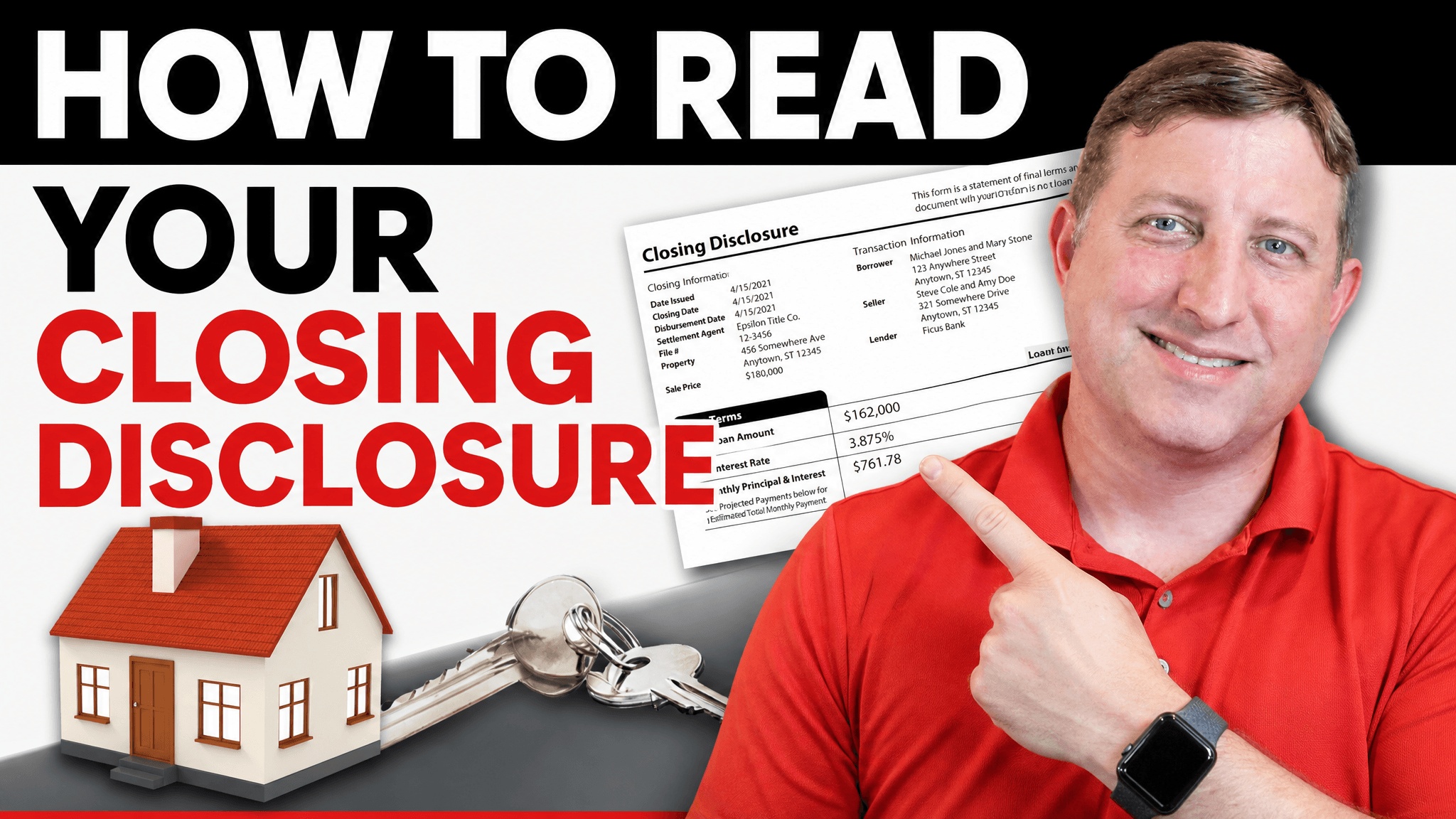
The Closing Disclosure
Federal law requires the lender to deliver the Closing Disclosure at least three business days before the closing appointment.
This document shows all costs, fees, and terms that will appear at the closing table.
Carefully reviewing the Closing Disclosure and comparing it to the original Loan Estimate is one of the most important steps before the signing appointment.
Any fee that increased significantly from the Loan Estimate should be questioned before closing day.
Items to verify on the Closing Disclosure:
- Loan amount and interest rate match what was agreed upon
- All lender fees match the Loan Estimate or have a valid explanation
- Seller concessions appear correctly as credits
- Earnest money already paid is reflected
- Prepaid items are accurate
- Cash to close matches available funds
⏰ What Can Delay a Texas Closing
Most Texas closings happen on schedule, but certain situations can push the timeline:
- Missing or incomplete documents from the buyer or seller
- Credit changes or new debt taken on after the application
- Appraisal that comes in below the purchase price
- Title issues including unpaid liens, judgment, or ownership disputes
- Lender underwriting conditions that require additional documentation
- Wire transfer or funding delays
Staying responsive to lender and title company requests, avoiding financial changes between contract and closing, and reviewing the Closing Disclosure before the appointment reduces the chance of last-minute complications.
Wire Fraud Warning
Texas closings involve large wire transfers, which makes them a target for wire fraud.
A common scheme involves a fraudulent email appearing to come from the title company with changed wiring instructions.
Before wiring any funds, call the title company directly using an independently verified phone number, not the one in the email containing the wiring instructions.
Verbal confirmation of wiring details before any transfer is one of the most important protective steps in the entire closing process.
Title insurance is one of the few closing costs that protects the buyer long after the transaction is over. In Texas, where the seller customarily pays for the owner’s policy, confirming that term is in the contract before signing is one of the simplest ways to protect yourself.” — Wade Betz, Winning With Wade | Mortgage Education and Strategy
✅ Texas Home Closing Costs Checklist
Before closing day:
- Request the Loan Estimate from the lender and review all projected costs
- Confirm whether the owner’s title insurance policy is included in the purchase contract and which party is paying
- Review the Closing Disclosure at least three business days before closing and compare it to the Loan Estimate
- Confirm the exact cash to close amount and have funds available in the required form
- Verify wiring instructions by phone before transferring any funds
- Bring a government-issued photo ID to the closing appointment
- Complete the final walk-through before signing
- Confirm the closing timeline with the title company and plan for potential same-day key handover
📣 Frequently Asked Questions (FAQs)
How much are closing costs in Texas?
Texas home closing costs typically range from 2% to 5% of the loan amount. The exact figure depends on the loan type, lender fees, title insurance premiums, prepaid items, and what is negotiated between buyer and seller in the purchase contract.
Who pays for title insurance in Texas?
In Texas, the seller customarily pays for the owner’s title insurance policy as part of the transaction. The buyer typically covers the lender’s policy. Both are paid at closing, and the allocation is a negotiable term of the contract.
Are title insurance rates the same at every title company in Texas?
Yes. The Texas Department of Insurance sets title insurance premiums statewide, so the rate for a given coverage amount is the same regardless of which title company is used. Service quality and experience are the primary factors to consider when choosing a title company.
When do buyers receive keys in Texas?
Keys are typically handed over after the lender funds the loan and the deed is recorded with the county. In most Texas closings, this happens the same day as the signing appointment, though exact timing depends on when the lender releases funds.
Can the seller pay for the buyer’s closing costs in Texas?
Yes. Seller concessions allow the seller to cover a portion of the buyer’s closing costs as agreed in the purchase contract. Each loan program sets limits on how much the seller can contribute.
What is the difference between closing costs and prepaid items?
Closing costs are fees paid to the lender and third-party service providers to complete the transaction. Prepaid items are funds collected at closing to cover upcoming homeownership expenses, including prepaid interest, homeowners insurance, and property tax escrow deposits. Both are part of the total cash needed to close.
What should I do if I receive different wiring instructions before closing?
Call the title company directly using a phone number you obtained independently, not from the email containing the new instructions. Wire fraud is a real risk in Texas real estate transactions, and verbal confirmation before transferring any funds is the most reliable protection.
This is educational and not financial advice. Loan programs and guidelines can change. Talk with a licensed mortgage professional about your specific scenario.

Wade Betz
Wade has been a stalwart in the mortgage industry since 2006, dedicating himself to helping thousands of families navigate the complexities of home financing. With so much experience, he stands out as a leading mortgage originator in the Dallas-Fort Worth area.
Related Posts