The Seller Financing Down Payment Myth
A seller carrying a second mortgage behind your loan does not mean you’re buying a home with no money down.
The seller financing down payment myth is the belief that the seller covers everything the bank loan doesn’t, so the buyer can walk into closing without bringing any cash.
I’ve structured seller seconds for buyers who still brought their own cash to closing and used the seller second to lower their monthly payment or avoid mortgage insurance.
A seller second is a real loan with a real rate sitting behind your main mortgage.
Rates remain elevated, and plenty of sellers are holding equity they would rather put to work, so buyers and sellers both benefit from understanding how a seller financing down payment structure works.
🏡 The Seller Financing Down Payment Myth
Hearing that a seller will carry a second mortgage makes it sound like the seller is handing the buyer the rest of the purchase price.
A seller second replaces the second loan a buyer might otherwise get from a bank or credit union, and the buyer still brings their own down payment.
The bank still holds the first mortgage, and the buyer still brings cash, so the only change is who holds the second note.
Buyers who plan around the seller financing down payment myth can end up short on cash when closing arrives.
What a Seller Second Replaces
A typical seller financing down payment structure on a purchase looks like this:
- The buyer brings 5% of the purchase price in cash as the down payment.
- The seller carries a second mortgage for another 15%.
- A lender provides a first mortgage for the remaining 80%.
That buyer put real money down, and the seller second took the place of a second bank loan the buyer would otherwise have needed to close the gap.
A seller second works for buyers who already have their down payment saved and want to lower their monthly cost or avoid mortgage insurance.
Buyers who haven’t saved a down payment yet need a different tool, since a seller financing down payment structure still depends on buyer cash.
📋 Rules That Keep a Seller Second Legitimate
Fannie Mae and Freddie Mac both allow seller-held second mortgages within specific guardrails, and missing even one can unravel the whole deal.
1. Market Rate of Interest
The seller second has to carry a market rate of interest.
Financing more than 2 percentage points below the going rate counts as a price cut, and lenders subtract it from the purchase price when qualifying the loan.
2. No Early Balloon or Negative Amortization
The seller second cannot include a balloon payment in the first five years.
Each payment must also cover at least the interest accruing that month, so the loan never negatively amortizes.
3. No Forgiveness
A seller second cannot be forgivable.
Employer-provided subordinate financing gets a forgiveness carveout, and that carveout does not extend to seller seconds.
4. Qualifying for Both Payments
The buyer has to qualify for the first mortgage payment and the seller second payment combined.
Fannie Mae and Freddie Mac treat a seller second like any other mortgage, with a documented loan, a recorded note, and the same paper trail a bank loan carries.
The seller holds the note in place of a bank.
Skipping any of these steps gives your lender grounds to kick the loan back or restructure it entirely, so a seller financing down payment structure needs clean paperwork from day one.
How a Seller Second Affects PMI
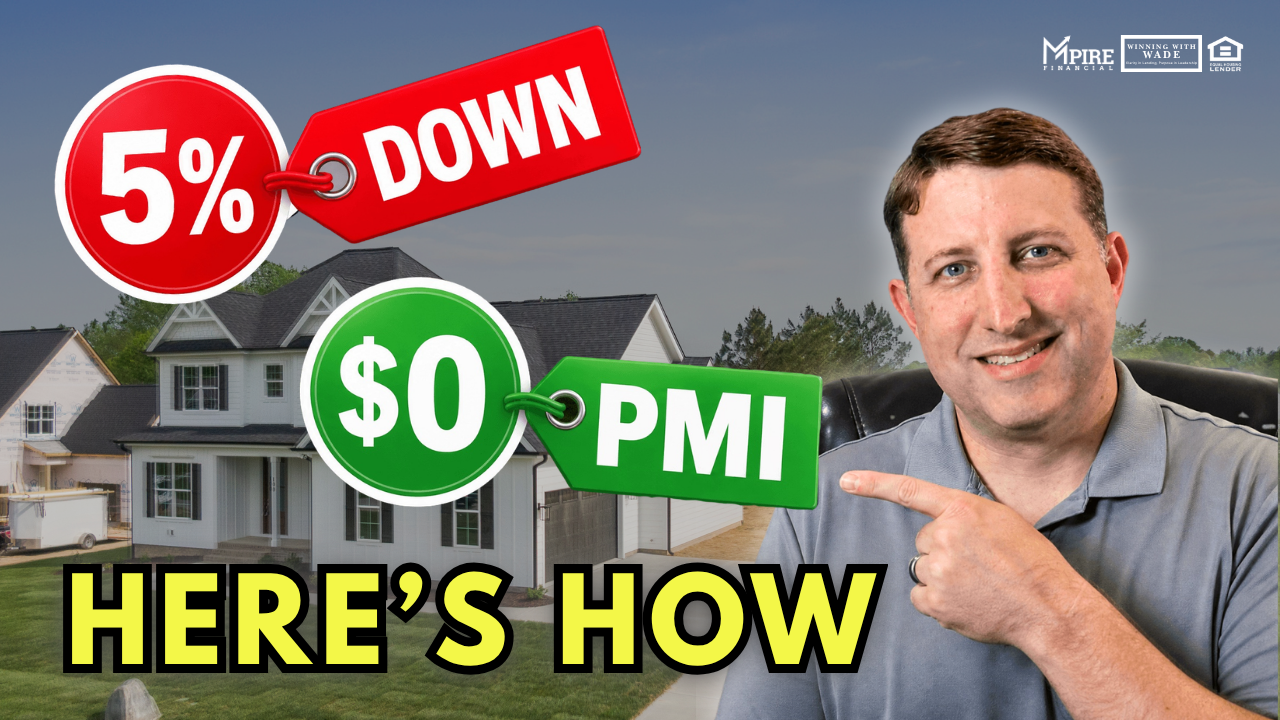
Structured correctly, a seller second can get a buyer into a home with as little as 5% down and no mortgage insurance.
Mortgage insurance depends only on the loan-to-value of your first mortgage.
Keeping the first loan at 80% or under keeps PMI out of the picture, and letting it run higher brings PMI back even with a seller second sitting right behind it.
The buyer with 5% down, a 15% seller second, and a first mortgage at exactly 80% pays no PMI, since the loan that determines PMI sits right at the threshold that avoids it.
The PMI savings in any seller financing down payment plan depend entirely on where the first mortgage lands.
Structuring the loan in this order protects those savings:
- Start with the cash the buyer has available.
- Work backward to keep the first mortgage at 80% or below.
- Let the seller second cover the space between that 80% and the buyer’s own down payment.
💸 Tax Considerations
Buyers who itemize may be able to deduct the interest on both the first mortgage and the seller second, subject to the usual mortgage interest deduction limits.
A tax professional can confirm how that applies to your individual situation.
What This Means for the Seller
A seller holding a second mortgage gets more from the arrangement than helping the buyer close.
The seller benefits in several ways:
- The note pays interest, which turns idle equity into income.
- The listing opens up to buyers who couldn’t otherwise afford it, so the property moves.
- The seller can hold their price, since the second loan solves the buyer’s cash problem in a different way.
- The seller still receives most of their money up front from the buyer’s first mortgage.
The second note is what makes the rest of the deal work.
Sellers who understand the seller financing down payment myth can explain the structure clearly and keep buyer expectations realistic from the first conversation.
For a seller with equity and some flexibility sitting on a property that isn’t moving, this can be the difference between a price cut and a closed deal at the number they wanted.” — Wade Betz, Winning With Wade | Mortgage Education and Strategy
📍 Where Down Payment Help Fits
Buyers who need help coming up with the down payment itself are having a different conversation, and a seller financing down payment structure can send them down the wrong path.
Many buyers assume they need 20% down on a conventional loan, so reviewing conventional loan down payment rules and where to find down payment help is a better starting point.
Seller Financing Down Payment Checklist
Before building an offer around a seller second:
- Confirm your own down payment is saved and ready for closing.
- Keep the first mortgage at 80% or below to avoid PMI.
- Make sure the seller second carries a market rate of interest.
- Confirm the seller second has no balloon payment in the first five years.
- Confirm each payment covers at least the interest accruing that month.
- Verify the seller second has no forgiveness terms.
- Qualify for both the first mortgage payment and the seller second payment.
- Document the seller second with a recorded note and a full paper trail.
- Ask a tax professional how the interest deduction applies to you.
📣 Frequently Asked Questions (FAQs)
Can seller financing cover my down payment?
A seller second covers part of the financing, and the buyer still brings their own cash to closing. Fannie Mae and Freddie Mac treat the seller second as a separate loan the buyer has to qualify for, which is where the seller financing down payment myth falls apart.
How much do I need to put down with a seller second?
A common seller financing down payment structure has the buyer putting 5% down, the seller carrying 15%, and a lender providing an 80% first mortgage. The buyer’s available cash is the starting point for the rest of the structure.
Does a seller second get rid of PMI?
A seller second removes PMI when the first mortgage stays at 80% loan-to-value or below. PMI still applies if the first mortgage runs higher, even with the seller second in place.
What interest rate does a seller second need to carry?
Fannie Mae and Freddie Mac require a market rate of interest. Financing more than 2 percentage points below the going rate counts as a price cut, and lenders subtract it from the purchase price used to qualify the loan.
Can a seller second be forgivable?
Fannie Mae and Freddie Mac do not allow a forgivable seller second. The carveout for employer-provided subordinate financing does not extend to seller seconds.
Do I have to qualify for both loan payments?
The buyer has to qualify for the first mortgage payment and the seller second payment combined. Lenders review both payments together when approving the loan.
Is the interest on a seller second tax deductible?
Buyers who itemize may be able to deduct interest on both loans within the usual mortgage interest deduction limits. A tax professional can confirm how that applies to you.
What if I don’t have a down payment saved?
A seller financing down payment structure still requires buyer cash, so it won’t close that gap. Review conventional loan down payment rules and where to find down payment help first.

Wade Betz
Wade has been a stalwart in the mortgage industry since 2006, dedicating himself to helping thousands of families navigate the complexities of home financing. With so much experience, he stands out as a leading mortgage originator in the Dallas-Fort Worth area.
Related Posts