
Can a Moved Manufactured Home Get a Conventional Mortgage?
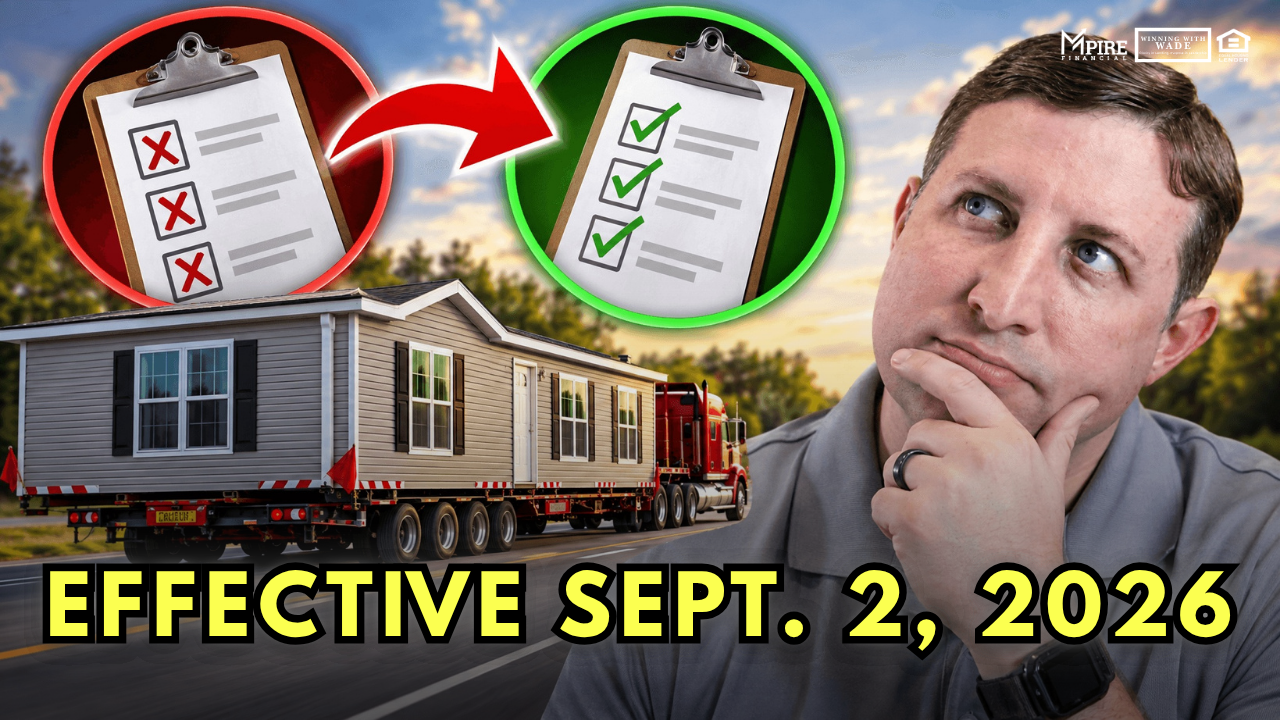
For years, a moved manufactured home could not get a conventional mortgage.
Buyers who wanted to move a home onto land they already owned had no standard financing option, and neither did homeowners who needed to relocate the home they lived in.
Freddie Mac changed the rule on September 2, 2026.
A moved manufactured home can now qualify for conventional financing if it passes a structural inspection and still fits the weather zones HUD rated it for.
I’ve watched buyers walk away from manufactured homes because the financing never came together.
The new rule opens a path to a standard 30-year mortgage for many of those buyers, but moving costs still fall on your side of the table, and most people never budget for them.
❌ Why Moved Homes Got Denied
Freddie Mac buys mortgages from lenders and packages them for sale, which is what lets most lenders offer standard 30-year rates in the first place.
Freddie Mac’s guidelines determine what a standard mortgage can look like, and before September 2, 2026, those guidelines excluded any manufactured home that had left its original site, no matter what shape it was in.
A moved manufactured home carried the same kind of label as a car with a rebuilt title, where the label alone keeps the car out of the standard lane even after a mechanic signs off on the repair.
Lenders pushed these homes into chattel loans and other personal property financing, and those loans came with three drawbacks:
- Interest rates ran higher than a standard mortgage.
- Repayment terms were shorter.
- Far fewer lenders were willing to offer them.
Picture a buyer who finds a manufactured home for sale two counties over and wants to move it onto land they already own.
Picture a second homeowner who inherits a family member’s land and wants to relocate the home they live in onto that property.
Under the old rule, neither person had a credit or down payment problem, and a paperwork label still blocked both loans, no matter how solid the home was.
What Changed on September 2, 2026
As of September 2, 2026, a move alone no longer disqualifies a manufactured home from conventional financing.
Freddie Mac will now back a mortgage on a moved manufactured home when a licensed engineer or the appropriate authority confirms the home is structurally sound where it sits today and its zone rating still fits its new location.
Once the home clears both conditions, the mortgage can cover the home and the land underneath it.
For the buyer moving a home from two counties over and the homeowner relocating onto inherited land, the path to a standard 30-year mortgage is open again.
🏡 What a Moved Manufactured Home Has to Pass
Freddie Mac attaches two conditions to every moved manufactured home, and the home has to clear both before the loan can close.
1. A Structural Integrity Report
Freddie Mac requires a licensed professional engineer or the appropriate local, state, or federal authority to verify the home’s structural integrity at its new site.
The report goes into your mortgage file and stays there, so get written confirmation that your inspection report will make it into the file.
Schedule the inspection early, since the loan can’t move forward without it.
2. A Matching HUD Zone
HUD code rates every manufactured home for the weather it can survive, with wind, snow, and heat zones built into the home the day it leaves the factory.
Freddie Mac’s second condition says a moved manufactured home can’t end up in a zone tougher than the one HUD rated it for.
The rule catches situations like a home rated for an inland, moderate wind zone that someone moves into a coastal county with stronger wind requirements.
Say a manufactured home carries an inland wind rating from one state, and a buyer purchases it and moves it three hours away to a coastal county with a tougher rating.
The engineer’s report confirms the structure is sound, and the loan still can’t close because the zones don’t line up.
Compare the home’s original zone rating with the zone at the new site early in the process, before a mismatch catches you late in the loan.
What the Loan Still Won’t Cover
Freddie Mac’s bulletin names four costs the loan can’t touch on a moved manufactured home:
- Delivery and setup of the home.
- Anchoring the home to its new foundation.
- Site development on the land.
- Permanent utility hookups, including water, septic, and electric.
You pay those costs out of pocket no matter how you structure the rest of the loan.
Think of the loan as covering the home and the dirt underneath it, with every bill tied to getting the home onto that dirt staying with you.
The truck that hauls the home, the crew that sets and anchors it, and the plumber who ties it into water and sewer each send their own bill on their own timeline.
Go back to the family moving a home from two counties over onto land they already own.
The new rule lets their mortgage cover the home and the land, and they still pay separately for trucking, anchoring, and utilities, which can add up fast depending on the distance and the site work.
The old rule blocked the mortgage entirely, and the new rule opens it back up while shifting the moving costs onto the buyer before the loan closes.
Before you get attached to a specific home or specific move, find out whether it’s ever been relocated.” — Wade Betz, Winning With Wade | Mortgage Education and Strategy
💸 How to Budget for the Move
Get quotes for delivery, anchoring, and utility hookups before you fall in love with a specific home.
Ask your lender which costs the loan covers and which ones fall on you, so the full cost of a moved manufactured home is clear before you commit.
You can cover the moving costs from a few sources:
- Savings you set aside for the move.
- A personal loan.
- A HELOC against the land.
Build the moving number into your budget the same way you’d plan for closing costs, since both come due around the same time.
The best time to bring both numbers, the loan and the move, to your lender is before you sign a contract or book a mover, while you still have time to line up the inspection.
Moved Manufactured Home Checklist
- Find out whether the home has ever been relocated from its original site.
- Schedule the engineer or authority inspection early if the home has moved.
- Get written confirmation that the inspection report will be added to your mortgage file.
- Compare the home’s original HUD zone rating with the zone at the new site.
- Get quotes for delivery, setup, anchoring, site work, and utility hookups.
- Ask your lender which costs the loan covers and which ones you’ll pay yourself.
- Choose how you’ll pay the moving costs, whether through savings, a personal loan, or a HELOC against the land.
- Budget for the move alongside your closing costs.
📣 Frequently Asked Questions (FAQs)
Can a moved manufactured home get a conventional mortgage?
As of September 2, 2026, Freddie Mac will back a conventional mortgage on a moved manufactured home that meets its conditions. The home needs a structural integrity verification and a HUD zone rating at least as strong as its new location requires.
Who has to inspect a moved manufactured home?
A licensed professional engineer or the appropriate local, state, or federal authority has to verify the home’s structural integrity at its new site. The report goes into your mortgage file and stays there.
What happens if the HUD zone doesn’t match the new location?
The loan can’t close if the new site sits in a tougher wind, snow, or heat zone than the one HUD rated the home for. A clean engineer’s report won’t fix a zone mismatch.
Does the mortgage cover the cost of moving the home?
Freddie Mac’s bulletin excludes delivery, setup, anchoring, site development, and permanent utility hookups from the loan. You pay those costs yourself, and they typically come due around the same time as closing costs.
Can I move the manufactured home I already live in onto new land?
The new rule opens conventional financing to homeowners relocating the home they live in, as long as the home passes the structural inspection and the zone check. You’ll still cover the cost of moving and hooking up the home yourself.
What financing did a moved manufactured home get before this change?
Lenders pushed these homes into chattel loans and other personal property financing. Those loans carried higher rates, shorter terms, and far fewer lenders willing to offer them.
How do I pay for delivery and utility hookups?
Common sources include savings, a personal loan, or a HELOC against the land. Plan for those costs the same way you’d plan for closing costs, since both come due around the same time.

Wade Betz
Wade has been a stalwart in the mortgage industry since 2006, dedicating himself to helping thousands of families navigate the complexities of home financing. With so much experience, he stands out as a leading mortgage originator in the Dallas-Fort Worth area.
Related Posts