Using a Reverse Mortgage Purchase to Buy Without a Monthly Payment
Most homeowners 62 and older who are thinking about downsizing assume the process works the same way it always has.
Sell the current home, use the proceeds as a down payment, take out a new mortgage, and start making monthly payments on a smaller property.
A reverse mortgage purchase offers a different path.
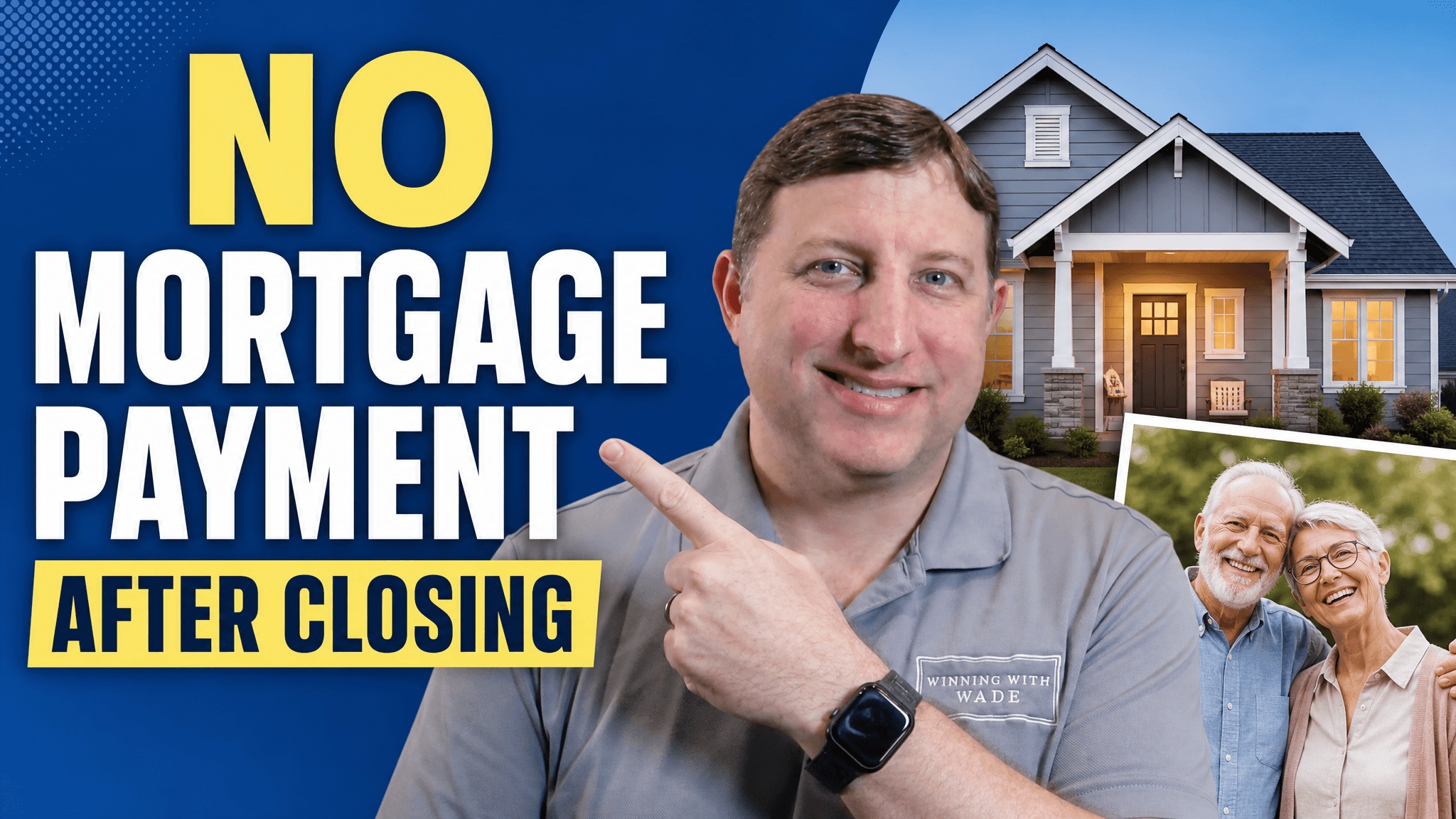
It lets eligible buyers use the proceeds from selling their current home to buy a new one through a HECM loan, without taking on a required monthly mortgage payment on the new property.
The loan isn’t repaid until the borrower moves out, sells the home, or passes away.
For seniors who want to free up cash flow, reduce housing costs, or stop making a mortgage payment in retirement, this option is worth understanding before deciding to downsize.
🏡 What a Reverse Mortgage Purchase Is
A reverse mortgage purchase, formally known as a HECM for Purchase, combines two transactions into one.
The borrower sells or uses equity from a current home and applies a portion of those proceeds as a down payment on a new property.
A HECM loan covers the remaining purchase price.
The result is a new home purchased outright at closing with no required monthly mortgage payment going forward.
The borrower must still pay property taxes, homeowners insurance, and maintain the home, but the mortgage payment obligation is eliminated.
The loan balance grows over time as interest accumulates.
That balance becomes due when the borrower permanently moves out, sells the property, or passes away.
Heirs may repay the balance and keep the home, or sell the home and keep any remaining equity after repayment.
Who Qualifies for a Reverse Mortgage Purchase
A reverse mortgage purchase has specific eligibility requirements.
All of the following must be met:
- The borrower must be at least 62 years old.
- The new property must be the borrower’s primary residence.
- The borrower must complete required HUD-approved reverse mortgage counseling before the loan is finalized.
- The borrower must demonstrate the financial ability to pay ongoing property charges, including taxes, insurance, and HOA dues if applicable.
- The property must meet FHA eligibility standards.
A financial assessment is part of the approval process.
The lender reviews income, assets, credit history, and the borrower’s ability to sustain ongoing homeownership costs.
In some cases, you may need to set aside funds to cover future property taxes and insurance.
💸 How the Down Payment Works
The down payment on a reverse mortgage purchase is typically larger than on a conventional mortgage.
The exact amount depends on the borrower’s age, the current interest rate, and the new home’s purchase price.
As a general guideline, buyers in their early to mid-60s may need to bring approximately 50% to 60% of the purchase price as a down payment.
Buyers in their mid-to-late 70s or older may need less because the HECM can cover a larger portion of the purchase price.
A lender can calculate the exact down payment needed for a specific borrower and property.
Many buyers use the proceeds from selling their current home to fund the down payment.
In a typical downsizing scenario:
- The current home is sold
- Proceeds cover the down payment on the new, smaller home
- The HECM covers the remainder of the purchase price
- No monthly mortgage payment is required going forward
- Remaining sale proceeds stay with the borrower as liquid assets
That last point matters significantly.
A borrower who sells a larger home and buys a smaller one through a conventional mortgage ties up a large portion of the sale proceeds in the down payment and still has a monthly payment.
A reverse mortgage purchase leaves more of those proceeds accessible.
What the Borrower Is Still Responsible For
Eliminating the monthly mortgage payment does not eliminate all housing costs.
Borrowers must continue to pay:
- Property taxes
- Homeowners insurance
- HOA dues if applicable
- General home maintenance and repairs
Failing to stay current on property taxes or homeowners insurance can put the loan in default, which is the same risk that applies to any homeowner.
The reverse mortgage purchase does not change those obligations.
It removes the mortgage payment while keeping everything else in place.
📈 How the Loan Balance Grows Over Time
With a conventional mortgage, each monthly payment reduces the loan balance over time.
A reverse mortgage works in reverse.
- The loan balance starts at the amount financed at closing and grows as interest accumulates.
- The borrower makes no payments toward that balance during the life of the loan.
- The full amount becomes due when the home is sold, the borrower moves out permanently, or the borrower passes away.
FHA insurance backs HECM loans and includes a non-recourse feature.
If the home sells for less than the loan balance, neither the borrower nor the heirs owes the difference.
The FHA insurance covers any shortfall. Heirs are never required to repay more than the home is worth.
How a Reverse Mortgage Purchase Compares
Two buyers, both 72 years old, both selling a $500,000 home and buying a $350,000 home.
One uses a conventional mortgage.
The other uses a reverse mortgage purchase.
Conventional downsize
- Down payment of $70,000 (20%)
- New mortgage of $280,000
- Monthly payment of approximately $1,700 to $1,900 depending on rate
- Remaining sale proceeds available: approximately $430,000 minus the down payment and costs
Reverse mortgage purchase
- Down payment of approximately $175,000 based on age and rate
- HECM covers the remaining $175,000
- No required monthly mortgage payment
- Remaining sale proceeds available: approximately $325,000 minus the down payment and costs
The conventional buyer has a lower upfront cost but carries a monthly payment.
The reverse mortgage buyer commits more upfront but frees up monthly cash flow entirely.
Which structure fits better depends on income, available assets, monthly budget, and long-term plans for the property.
⏰ When a Reverse Mortgage Purchase Makes Sense
A reverse mortgage purchase tends to be a stronger fit when:
- Monthly income in retirement is fixed, and a new mortgage payment would strain the budget
- The goal is to eliminate all required housing debt obligations
- The current home has significant equity that can fund a meaningful down payment
- The new home is smaller, lower maintenance, or better suited to aging in place
- Keeping liquid assets accessible after the purchase is a priority
- The borrower plans to stay in the new home long term
It may be less suitable when:
- The borrower expects to move again within a few years
- The down payment would consume most or all of available assets
- Leaving maximum equity for heirs is the primary priority
- The property does not meet FHA eligibility standards
New Construction and Timing Considerations
A reverse mortgage purchase on a newly built home involves one critical rule: the home must be 100% complete and have a certificate of occupancy issued before the loan can close.
FHA does not allow a HECM for Purchase to close on a home that is still under construction.
For buyers working with a builder, the projected completion date and the certificate of occupancy issuance date are often different.
Local municipal inspections and approvals can add weeks after construction is physically complete.
Planning the reverse mortgage purchase timeline around the certificate of occupancy rather than the builder’s estimated finish date prevents unexpected delays.
📋 The Role of HUD Counseling
Before a reverse mortgage purchase can be finalized, the borrower must complete a counseling session with a HUD-approved reverse mortgage counselor.
The counseling covers:
- How the HECM program works
- Financial implications of the loan
- Alternatives to consider
- The borrower’s rights and obligations
- Long-term impact on equity and estate planning
Counseling is required and cannot be skipped or completed after the loan closes.
It is also an opportunity to ask detailed questions in a setting where the counselor has no financial stake in whether the borrower proceeds.
You can find HUD-approved counselors at HUD.gov or by calling 1-800-569-4287.
Most people think about downsizing as selling the big house, buying the small house, and starting making payments again. The reverse mortgage purchase changes the last part of that equation entirely.” — Wade Betz, Winning With Wade | Mortgage Education and Strategy
Questions to Ask Before Moving Forward
Before committing to a reverse mortgage purchase, work through these questions with a lender and a HUD-approved counselor:
- What is the estimated down payment based on age, rate, and purchase price?
- How much of the current home’s sale proceeds would remain after the down payment?
- What are the ongoing costs, including taxes, insurance, and HOA?
- How does the loan balance grow over time, and what does that mean for heirs?
- How does a reverse mortgage purchase compare to a conventional mortgage for this specific situation?
- What happens if one spouse is under 62?
That last question matters for couples.
If one borrower is under 62, they cannot be on the HECM loan.
Protections are available for eligible non-borrowing spouses, but the loan structure changes, and you should review the details carefully before proceeding.
✅ Reverse Mortgage Purchase Checklist
Before moving forward:
- Confirm age eligibility of all borrowers and any non-borrowing spouse
- Calculate the estimated sale proceeds from the current home
- Ask a lender to estimate the required down payment based on age, rate, and purchase price
- Confirm the new property meets FHA eligibility requirements
- Complete HUD-approved reverse mortgage counseling
- Review the ongoing costs including property taxes, insurance, and HOA
- Compare the reverse mortgage purchase structure to a conventional mortgage for the same scenario
- For new construction, confirm the certificate of occupancy timeline before signing a builder contract
📣 Frequently Asked Questions
What is a reverse mortgage purchase?
A reverse mortgage purchase, also called a HECM for Purchase, allows eligible buyers 62 and older to buy a new primary residence using a reverse mortgage. A down payment is required at closing, and no monthly mortgage payment is required going forward. The loan balance grows over time and becomes due when the borrower moves out, sells the home, or passes away.
How much is the down payment on a reverse mortgage purchase?
The down payment varies based on the borrower’s age, current interest rates, and the purchase price of the new home. Younger borrowers generally need a larger down payment. A lender can calculate the specific amount for any given scenario.
Do I still have to pay property taxes and insurance?
Yes. The reverse mortgage purchase eliminates the monthly mortgage payment but does not eliminate property taxes, homeowners insurance, HOA dues, or maintenance obligations. Staying current on those costs is required to keep the loan in good standing.
What happens when the borrower passes away or moves out?
The loan becomes due. Heirs may repay the balance and keep the home, sell the home and keep any remaining equity, or walk away if the loan balance exceeds the home’s value. FHA insurance ensures heirs are never required to repay more than the home is worth.
Can a reverse mortgage purchase be used on new construction?
Yes, but the home must be 100% complete with a certificate of occupancy issued before the loan can close. FHA does not permit a reverse mortgage purchase to close on a home that is still under construction.
What if my spouse is under 62?
A spouse under 62 cannot be on the HECM loan. Protections exist for eligible non-borrowing spouses, but the loan structure changes and should be reviewed carefully with a lender and HUD counselor before proceeding.
Is HUD counseling required?
Yes. Every borrower must complete a session with a HUD-approved reverse mortgage counselor before the loan can be finalized. Counseling covers how the program works, alternatives to consider, and the loan’s long-term financial implications.

Wade Betz
Wade has been a stalwart in the mortgage industry since 2006, dedicating himself to helping thousands of families navigate the complexities of home financing. With so much experience, he stands out as a leading mortgage originator in the Dallas-Fort Worth area.
Related Posts