Most homeowners who look into paying off student loans with home equity walk away too…
How the VA Funding Fee Works
VA home loans come with headline benefits most veterans already know: no down payment, no private mortgage insurance, and competitive interest rates.
The VA funding fee often comes up late in the conversation and catches borrowers off guard.
Understanding how it is calculated, who qualifies for a full exemption, and who actually has to pay it changes the entire planning conversation before an offer gets written.
What the VA Funding Fee Is and Where the Money Goes
The VA funding fee is a one-time charge on most VA-guaranteed home loans. It does not go to the lender.
It goes directly to the VA to keep the home loan program running and available for future veterans and service members.
Congress created the fee so the program can sustain itself without relying entirely on taxpayer funding.
The no-down-payment, no-mortgage-insurance structure that makes VA loans so valuable depends on this mechanism to remain viable long term.
How the VA Funding Fee Is Calculated
The VA funding fee is a percentage of the total loan amount, not a flat dollar figure.
A larger loan produces a larger fee in dollar terms.
Three variables determine the exact percentage:
- Service category, which covers active duty, veterans, reserves, and National Guard, all under the same fee structure
- Whether this is a first use of the VA loan benefit or a subsequent use, with the first use carrying a lower rate
- Whether the borrower makes a down payment and how much, with higher down payments producing lower rates
Asking the lender for the current applicable rate before an offer is finalized keeps the number from becoming a surprise at closing.
🥊 First Use vs. Subsequent Use and Why It Changes the Fee
First-time use of the VA home loan benefit is subject to a lower VA funding fee rate.
Any use after the first carries a higher rate, particularly at the no-down-payment tier.
Repeat VA borrowers benefit most from strategically considering a down payment, because it directly reduces the fee rate, regardless of how many times the benefit has been used.
One Exception Worth Knowing
If the only prior use of VA entitlement involved a manufactured home loan, the higher subsequent-use rate does not apply, and the fee is calculated at the first-use rate instead.
Confirming this detail with the lender at the start of the process prevents a miscalculation from showing up later.
How a Down Payment Directly Reduces the VA Funding Fee
The VA allows purchase with no down payment, but choosing to put money down has a direct and meaningful impact on the funding fee rate.
- A down payment of at least 5 percent lowers the VA funding fee rate noticeably
- A down payment of at least 10 percent lowers it further to the lowest tier available for purchase loans
Those reductions apply on both first use and subsequent use.
A down payment accomplishes two things at once:
- It reduces the loan balance, which lowers the monthly payment,
- And it reduces the percentage charged for the VA funding fee.
For borrowers with savings available, that compounding benefit is worth factoring into the purchase plan.
🎖️ Who Qualifies for a Full VA Funding Fee Exemption
A significant number of VA borrowers owe zero in funding fees, and many of them never find out because they do not ask early enough.
Borrowers exempt from the VA funding fee include:
- Veterans receiving VA compensation for a service-connected disability
- Veterans entitled to receive VA compensation for a service-connected disability but currently receiving military retirement pay or active service pay instead. Entitlement to the compensation qualifies for the exemption even when the borrower draws retirement or active duty pay in its place
- Unmarried surviving spouses of veterans who died in active service or from a service-connected disability and receive Dependency and Indemnity Compensation
- Service members who received a proposed or memorandum rating from the VA before loan closing confirming eligibility to receive compensation from a pre-discharge claim. The claim may still be pending, but the VA’s indication of eligibility is enough to qualify for the exemption before the final rating is issued
- Service members awarded the Purple Heart who can document it on or before the closing date
Any borrower who qualifies pays zero in VA funding fees regardless of loan size, down payment amount, or whether it is a first or subsequent use of the benefit.
Confirm exemption status with the lender at the very beginning of the process, not at the closing table.
The Seller, Lender, or Another Party Can Pay the VA Funding Fee
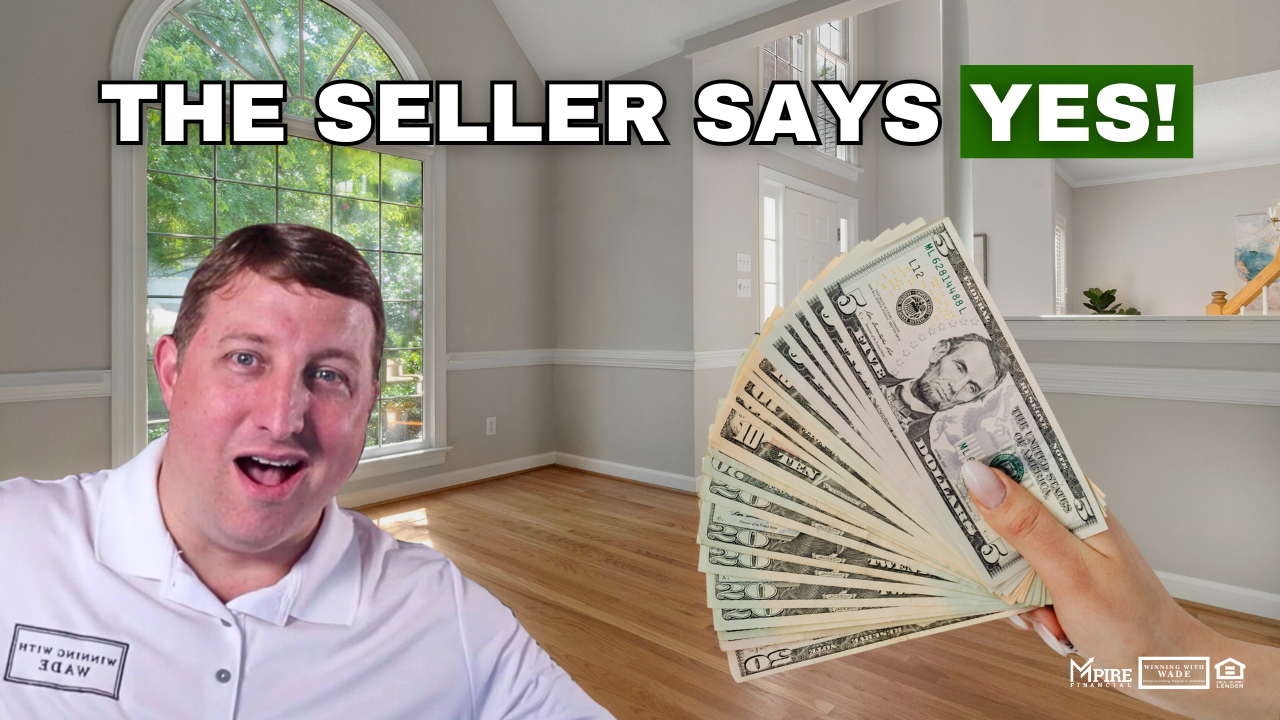
VA policy explicitly allows the seller, the lender, or any other party to pay the VA funding fee on the borrower’s behalf.
Most VA borrowers never hear this, which makes it one of the most underused options available.
The VA funding fee is a negotiable item in a purchase transaction.
In markets where sellers are motivated to close, asking the seller to cover the funding fee as part of the offer negotiation is a completely reasonable request.
Key points on seller concessions and the VA funding fee:
- Sellers can provide up to 4 percent in concessions on the loan amount
- The VA funding fee can be structured as part of those concessions
- Gift funds from family can also cover the VA funding fee, subject to applicable gift documentation requirements
The funding fee should be part of every purchase negotiation conversation, not something a borrower quietly absorbs without exploring all options.
Paying the VA Funding Fee at Closing vs. Rolling It Into the Loan
When no other party covers the VA funding fee, two payment options exist.
Paying in cash at closing keeps the loan balance lower, avoids financing the fee, and costs less overall on a long-term loan. The trade-off is the upfront cash requirement.
Rolling the fee into the loan reduces the cash needed at closing but adds the fee to the loan balance. The borrower pays interest on that amount over the life of the loan, which adds up meaningfully on a 30-year mortgage.
The right choice depends on cash reserves, how long the borrower plans to stay in the home, and whether a sale or refinance is likely within a few years.
A lender can run both scenarios side by side so the borrower sees the exact difference before committing.
💸 VA Funding Fee Rates on Other VA Loan Types
The rates covered above apply to standard VA purchase loans and cash-out refinances.
Other VA loan types carry their own fee structures:
- IRRRLs (Interest Rate Reduction Refinance Loans) carry a significantly lower VA funding fee than a new purchase loan, making a rate-reduction refinance on an existing VA loan far less costly in fee terms
- Loan assumptions, where a buyer takes over the seller’s existing VA loan rather than opening a new one, also carry a low VA funding fee, which is one of the factors that makes assumptions financially attractive when interest rates are elevated
- The Native American Direct Loan program, which provides direct VA lending for eligible Native American veterans purchasing on federal trust land, carries its own fee structure separate from standard purchase loan tiers
VA’s funding fee tables are publicly available and reflect current figures. A lender can provide the applicable rate for any of these loan types.
The VA funding fee is not optional for most borrowers, but it is manageable. Knowing your exemption status, your rate tier, and who can pay it before you sit down to negotiate puts you in control of a cost that too many borrowers just accept without asking a single question.”
— Wade Betz, Winning With Wade | Mortgage Education and Strategy
Questions to Work Through Before You Apply
Addressing these questions before the loan process begins prevents the VA funding fee from becoming a last-minute surprise:
- Does a service-connected disability, a pending pre-discharge claim, a Purple Heart, or DIC status qualify for an exemption?
- Is this a first use or subsequent use of the VA benefit, and does a prior manufactured home loan affect that calculation?
- Would a 5 or 10 percent down payment meaningfully reduce the total loan cost when the funding fee reduction is factored in alongside the lower loan balance?
- Can the seller cover the VA funding fee as part of the negotiation?
- Does paying the fee in cash at closing or rolling it into the loan make more sense given the expected length of ownership?
VA Funding Fee Planning Checklist
Before submitting a loan application:
- Confirm exemption status with the lender at the start of the process
- Ask the lender for the current applicable VA funding fee rate based on service category, use history, and planned down payment
- Run the numbers on a 5 and 10 percent down payment to see the combined impact on the fee rate and loan balance
- Include the VA funding fee in purchase negotiations and ask whether the seller can cover it
- Ask the lender to model both payment options, cash at closing versus rolled into the loan, before deciding
📣 Frequently Asked Questions
Does every VA borrower pay the VA funding fee?
No. Veterans receiving or entitled to VA compensation for a service-connected disability, qualifying unmarried surviving spouses receiving DIC, service members with a proposed or memorandum rating before closing, and Purple Heart recipients with documentation at closing all qualify for a full exemption. The fee is zero regardless of loan size, down payment, or use history for any borrower who qualifies.
How do I confirm a VA funding fee exemption?
Raise the question with the lender at the very start of the process. Provide documentation supporting the exemption, such as disability compensation records or Purple Heart documentation, so the lender can confirm the status before the loan moves forward.
What brings the VA funding fee rate down the most?
A down payment of at least 10 percent brings the rate to the lowest tier available for purchase loans. A down payment of at least 5 percent also produces a meaningful reduction. Both reductions apply on first use and subsequent use of the benefit.
Does rolling the VA funding fee into the loan mean not paying it?
Rolling the fee into the loan finances it rather than eliminating it. The borrower pays interest on the added balance over the life of the loan. Paying in cash at closing avoids that interest cost but requires more upfront funds.
Can the seller pay the VA funding fee?
Yes. VA policy allows the seller, lender, or any other party to pay the VA funding fee on the borrower’s behalf. It qualifies as a seller concession within the applicable limits and should be part of every purchase negotiation.
Do IRRRLs and loan assumptions carry the same VA funding fee as purchase loans?
No. IRRRLs carry a significantly lower VA funding fee than new purchase loans. Loan assumptions also carry a low fee compared to initiating a new purchase. The Native American Direct Loan program carries its own separate fee structure.

About the Author
Wade Betz
Mortgage Broker at Winning WIth Wade · NMLS #280613
Wade has been a stalwart in the mortgage industry since 2006, dedicating himself to helping thousands of families navigate the complexities of home financing. With so much experience, he stands out as a leading mortgage originator in the Dallas-Fort Worth area.
Specializes in: DSCR Loans, VA Loans, Reverse Mortgages
Licensed in: AL, AZ, AR, CA, CO, CT, FL, GA, ID, IL, IN, KS, LA, MD, MI, MS, MT, NE, NJ, NM, NC, OH, OK, OR, PA, SC, TN, TX, VA, WA, WI
Related Posts