
Most homeowners who look into paying off student loans with home equity walk away too…
How Real Estate Wire Fraud Targets Home Buyers
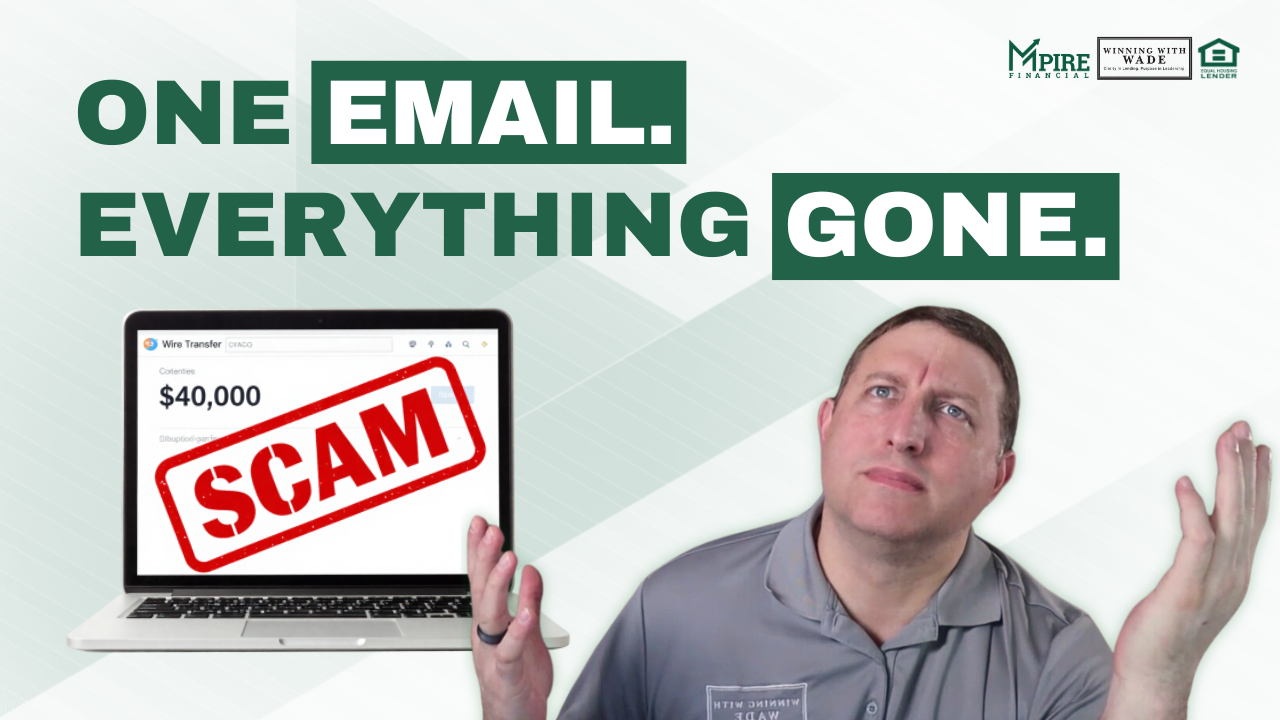
Buying a home is one of the largest financial transactions most people will ever make, and real estate wire fraud targets that process when large sums of money are moving.
During a transaction, buyers are asked to wire earnest money, a down payment, closing costs, or all three.
Criminals who understand the real estate process know who is involved, what the timeline looks like, and when to strike.
Real estate wire fraud follows recognizable patterns, and a few disciplined habits can stop most attempts before they succeed.
What Real Estate Wire Fraud Is
Real estate wire fraud happens when a criminal tricks a homebuyer into wiring money to the wrong bank account by impersonating someone already trusted in the transaction.
The message typically appears to come from the title company, lender, or real estate agent and includes wire instructions alongside a sense of urgency.
Because the email often contains accurate transaction details, many buyers assume it is legitimate and send funds without verifying independently.
The email looks organized, timely, and familiar because the scammer has been monitoring the transaction and knows what to say.
🎯 Why Real Estate Transactions Are a Target
Several factors make homebuyers particularly vulnerable:
- Large sums move in a short window, often all at once.
- Multiple parties communicate over an extended period, creating many opportunities for impersonation.
- Real deadlines create pressure that makes urgency feel normal rather than alarming.
A typical purchase involves communication with the lender, the real estate agent, the title company, the seller’s agent, and other service providers, most of it by email and text.
Real estate wire fraud works by stepping into the existing communication flow and making a fraudulent message appear to be part of the normal process.
First-time buyers face a higher risk because it is harder to recognize that something is wrong, without knowing what legitimate wire instructions normally look like or whether last-minute changes are common.
How Scammers Find Their Targets
Public listing data is widely accessible, and once a property goes under contract, multiple professionals begin exchanging information about the transaction.
Fraudsters monitor those signals, gather names, dates, property details, and company identities, and wait for the moment money is expected to move.
Real estate wire fraud most often surfaces near earnest money delivery or closing because the request feels believable when the timing matches what the buyer already expects.
⚠️ Common Tactics Used in Real Estate Wire Fraud
Business Email Compromise
A fraudster impersonates a company already involved in the transaction and sends fake wire instructions from what appears to be a legitimate email address.
The difference between the real address and the fake one is often a single character, an added number, or a slightly different domain.
Most people miss it when moving quickly.
Email Account Compromise
In more sophisticated attacks, the criminal gains access to a real email account and sends fraudulent messages from it.
The sender address looks completely legitimate because it is the real account.
Phishing
Emails or texts that appear to come from a trusted source ask the buyer to click a link, open an attachment, or provide information.
A successful phishing attempt can give criminals access to accounts or devices, enabling a more targeted follow-up attack.
Spoofing
The scammer falsifies a phone number or email identity so the communication appears to come from someone the buyer already knows.
AI-Generated Voice Messages
A growing tactic involves voice messages that sound like a real agent, lender, or title officer asking the buyer to follow new wiring instructions.
A voicemail alone is never a sufficient reason to change banking details or send funds.
Urgency Is the Scammer’s Most Reliable Tool
Every real estate wire fraud attempt depends on pressure.
The message implies that the closing is at risk, that funds must move immediately, or that a last-minute issue requires fast action.
Scammers understand that homebuyers are already managing deadlines, paperwork, and stress; creating just enough urgency can push someone to act before stopping to verify.
The most important protection is to slow down and verify before sending money.
🛑 The One Step That Stops Most Attempts
It is essential to verify every wire instruction by phone before sending any funds:
- Call the title company or lender directly using a phone number already on file, previously used, or independently looked up.
- Do not use the phone number included in the email containing the wire instructions. If the email is fraudulent, that number likely routes to the scammer.
This single habit breaks the scammer’s control of the communication and stops most real estate wire fraud attempts before money moves.
Habits That Reduce Risk Throughout the Transaction
Treat Email-Only Wire Instructions as Incomplete
Wire instructions arriving by email are only the first step.
Verbal confirmation through a trusted phone number is always the second step, regardless of how professional the email looks.
Check the Full Sender Address
Real estate wire fraud often depends on small visual differences that are easy to miss in a hurry.
Open the full sender details and compare carefully. Never rely solely on the display name.
Contact Senders Through Established Methods
If an email feels unusual, avoid replying directly.
Use a previously established phone number or contact method instead of continuing the email chain.
Use a Private Internet Connection
When reviewing loan documents, discussing wiring details, or sharing financial information, avoid public Wi-Fi.
Public networks create unnecessary exposure.
Be Cautious with Links and Attachments
Even familiar-looking emails can carry malicious files.
If an attachment was not expected or the request seems unusual, confirm with the sender before opening anything.
Treat Last-Minute Changes as Suspicious
A sudden claim that wire instructions changed is one of the most common real estate wire fraud setups.
Legitimate wiring instructions rarely change and should never be updated solely through email.
Wait Until After Closing to Share Publicly
Posting about a home purchase before closing signals that a transaction is underway.
The more visible the purchase, the easier it is for a scammer to identify the buyer as a target.
Real estate wire fraud depends on confusion, speed, and misplaced trust in digital communication. Once you understand how the scheme works, you are in a much stronger position. Verify first. Wire second.” — Wade Betz, Winning With Wade | Mortgage Education and Strategy
🔍 If You Think Fraud Already Occurred
Do not wait to see whether the issue resolves on its own. Take action immediately:
- Contact your bank right away and request a wire recall
- File a complaint with the FBI’s Internet Crime Complaint Center at ic3.gov
- Contact your local FBI field office
- Notify your real estate agent, lender, and title company so other parties can be alerted
Recovery is not guaranteed, but acting immediately gives the strongest possible chance.
Wire Transfer Safety Checklist
Before sending any funds:
- Call the title company or lender using a trusted, independently verified phone number
- Confirm account and routing details verbally before wiring
- Check the full sender email address, not just the display name
- Treat any claim that wire instructions changed as suspicious until verified by phone
- Never use a phone number from the email containing the wire instructions
- Use a private internet connection for all transaction-related communication
- Report immediately if fraud is suspected: bank first, then ic3.gov, then all parties in the transaction
📣 Frequently Asked Questions (FAQs)
What is real estate wire fraud in simple terms?
A scammer impersonates someone trusted in the transaction, such as the title company, lender, or agent, and tricks the buyer into sending funds to a fraudulent bank account.
What is the safest way to verify wire instructions?
Call the title company or lender directly using a phone number already on file or one you independently look up. Never use the number included in the email containing the instructions.
Are last-minute changes to wire instructions normal?
A sudden claim that wire instructions changed should be treated as highly suspicious. In real estate wire fraud, that scenario is one of the most common setups.
Can a real email account be used to commit fraud?
Yes. Criminals sometimes gain access to real email accounts and send fraudulent messages from them. Verbal confirmation by phone remains essential even when the email address appears genuine.
Are first-time buyers more vulnerable?
Often yes. Without prior experience, it is harder to recognize which requests are routine and which should trigger concern. Knowing in advance that every wire instruction must be confirmed by phone removes that uncertainty.
What should I do if I already sent money to a scammer?
Contact your bank immediately to request a wire recall, file a report at ic3.gov, reach your local FBI field office, and notify your agent, lender, and title company right away.

About the Author
Wade Betz
Mortgage Broker at Winning WIth Wade · NMLS #280613
Wade has been a stalwart in the mortgage industry since 2006, dedicating himself to helping thousands of families navigate the complexities of home financing. With so much experience, he stands out as a leading mortgage originator in the Dallas-Fort Worth area.
Specializes in: DSCR Loans, VA Loans, Reverse Mortgages
Licensed in: AL, AZ, AR, CA, CO, CT, FL, GA, ID, IL, IN, KS, LA, MD, MI, MS, MT, NE, NJ, NM, NC, OH, OK, OR, PA, SC, TN, TX, VA, WA, WI
Related Posts