Homeowners Insurance Requirements Your Lender Checks Before Closing
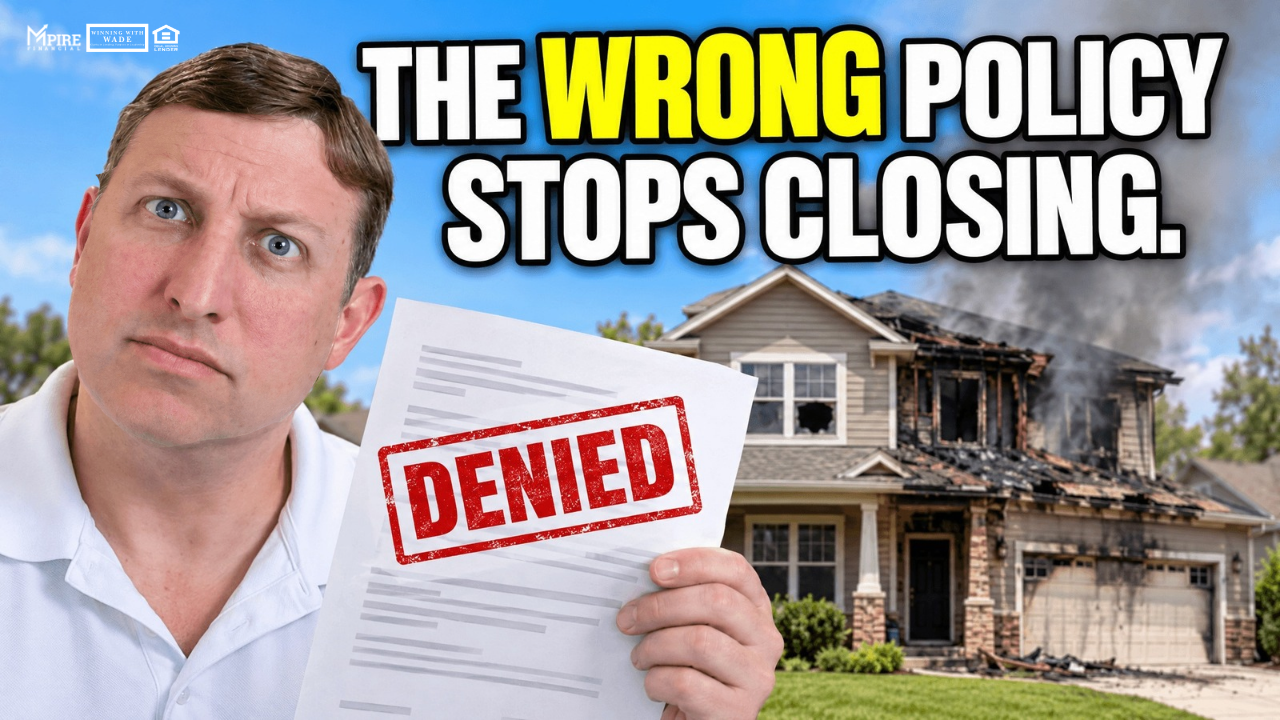
Two homeowners insurance policies can carry the same coverage limit and still pay you very different amounts after the same storm because each policy settles a claim differently.
Homeowners insurance requirements from your lender add another layer, since the policy you choose has to meet your loan program’s rules before you close.
Those homeowners insurance requirements shape how the policy pays a claim on your home, which risks it has to cover, and how high your deductible can go.
The same rules also determine whether you need a separate condo policy or flood insurance in addition to your homeowners coverage.
Knowing what your lender looks for before you shop helps you choose a policy that meets your loan’s standards and still pays enough to repair your home after a loss.
⚖️ Replacement Cost vs. Actual Cash Value
Homeowners insurance requirements start with three terms you’ll see when you shop for coverage, and each one affects how much a claim pays.
1. Replacement Cost Value
Replacement cost value, or RCV, is what it would cost today, in current dollars, to repair or rebuild your home with materials of like kind and quality.
Insurers start with this number on every claim, including policies that settle at actual cash value.
2. Replacement Cost Coverage
Replacement cost coverage is a policy provision that pays covered losses in full without subtracting anything for depreciation.
This coverage pays only up to your policy limit, so a limit set too low can still leave you short of what you need for a full rebuild.
3. Actual Cash Value
Actual cash value, or ACV, settles your claim by starting with the replacement cost and subtracting depreciation for age and wear.
The check comes in lower than the cost to replace the damage, and the older the item is, the more depreciation comes off.
You cover that difference out of pocket, which is how two policies with the same limit can pay very different amounts after the same loss.
Homeowners Insurance Requirements by Loan Type
Homeowners insurance requirements vary by loan program, so the coverage that satisfies a conventional loan can look different from what a VA or USDA loan expects.
Conventional Loan Requirements
Fannie Mae and Freddie Mac set the guidelines for conventional loans, and both require the policy on a one- to four-unit home to settle claims on a replacement cost basis.
Your roof is the exception: your policy still has to insure it, but it doesn’t have to cover it at replacement cost.
Both agencies also accept actual cash value terms on your personal property and on structures that aren’t buildings, so read how your policy settles each part of your property.
Freddie Mac’s homeowners insurance requirements also list the risks your policy has to cover:
- Fire and lightning
- Windstorm, including named storms
- Hail
- Explosions
- Riot and civil commotion
- Aircraft and vehicles
- Smoke
If your main policy leaves out one of those risks, you need a second policy that covers it.
USDA and VA Coverage Standards
USDA’s homeowners insurance requirements say a policy shouldn’t exclude wind, hurricane, or catastrophe coverage unless another policy provides it at the same limits.
VA sets its standard a little differently and asks for coverage that’s customary in your area, in an amount that protects the home against local risks.
Your VA coverage must be in place before closing and remain in place for the life of the loan.
If you ever file a claim, the payout goes toward restoring the home or paying down your loan balance.
Confirm your homeowners insurance requirements against your specific loan program before you buy a policy, since coverage that works for one program can fall short on another.
🛑 The 5% Deductible Limit
Under current agency guidelines, homeowners insurance requirements put a ceiling on your deductible, and each program measures it a little differently:
- Fannie Mae caps the deductible at 5% of your property insurance coverage amount.
- Freddie Mac caps the deductible at 5% of your dwelling coverage limit.
- USDA’s handbook says deductibles should stay at or under 5% of the total coverage amount.
If your policy carries a separate deductible for a specific risk like windstorm or wildfire, that deductible also has to stay within the 5% limit.
What 5% Looks Like in Dollars
Say your home has $300,000 in dwelling coverage, which puts your 5% limit at $15,000.
You need to have that money on hand the day a claim comes in, so even a maximum deductible can stretch your budget.
On a USDA loan, your lender also has to make sure a high deductible is reasonable for you and won’t cause undue hardship in repaying the loan.
Review your homeowners insurance requirements next to your savings, since the deductible you can comfortably cover may sit well below the ceiling your loan allows.
When Your Condo Needs Its Own Policy
With a condo, the homeowners association, or HOA, carries a master policy on the building.
Fannie Mae and Freddie Mac require that master policy to cover at least 100% of the estimated replacement cost of the project, including the common areas and the residential structures.
You’ll need your own interior unit policy, commonly called an HO-6 or walls-in policy, when the master policy does either of the following:
- The master policy doesn’t cover the inside of your unit.
- The master policy carries a per-unit deductible.
FHA loans have the same requirement when the master policy leaves out interior coverage, including improvements you’ve made to the unit.
🏡 Condo Deductible and HO-6 Limits
Condo homeowners insurance requirements also set limits at both levels of coverage, based on current guidelines:
- Fannie Mae and Freddie Mac cap per-unit deductibles at $50,000.
- Freddie Mac requires your HO-6 to cover enough to repair your unit to its pre-loss condition, or the per-unit deductible if that amount is higher.
- Freddie Mac also requires your HO-6 to pay on a replacement cost basis.
- Your HO-6 deductible can’t go above 5% of the coverage limit or $2,500, whichever is greater.
Reading the master policy and your HO-6 side by side shows you where the HOA’s coverage stops and yours begins.
Flood Insurance in a High-Risk Zone
If your home sits in a special flood hazard area that the Federal Emergency Management Agency, or FEMA, identifies, you’ll need flood insurance in addition to your homeowners policy.
The flood policy carries its own homeowners insurance requirements, so a main policy that meets your lender’s standards still leaves this piece to arrange.
The required amount depends on your loan program, and on a USDA loan the flood policy has to cover the lesser of these two amounts:
- Your outstanding loan balance
- The maximum allowed under the National Flood Insurance Program
USDA requires the flood policy to stay in force for the life of the loan.
USDA’s handbook also says the flood deductible shouldn’t exceed $10,000 unless state or federal law allows for more.
Replacement cost coverage is a provision in your policy that pays covered losses in full with no deduction for depreciation.” — Wade Betz, Winning With Wade | Mortgage Education and Strategy
📉 Ways to Lower Your Insurance Premium
When you pay your homeowners insurance through escrow, the premium becomes part of your monthly mortgage payment.
VA points out that high insurance costs can reduce how much you’re eligible to borrow, so the premium deserves as much attention as the coverage.
Once a policy meets your homeowners insurance requirements, these options can bring the cost down:
- VA suggests veterans shop around, since some insurers offer rates, discounts, or other benefits for the veteran community.
- Many insurers offer discounts when you bundle policies like car, life, and homeowners insurance.
- In some states that see frequent disasters, better protection can lower your premium.
- Some states run insurance pools that cover designated high-risk areas, so check what your state has available.
How to Check a Policy Before You Buy
Check these four homeowners insurance requirements against your loan before you choose a policy:
- Look at how the policy settles a claim on the home, since conventional loans require replacement cost coverage on the home itself, with the roof as the exception.
- Compare every deductible to your loan’s limit, which is 5% on a conventional loan, and include any separate deductible for windstorm or wildfire.
- Find out whether the HOA’s master policy covers the inside of your unit or carries a per-unit deductible, since either one means you’ll need an HO-6 policy.
- Check whether the home sits in a special flood hazard area, which means flood insurance on top of your homeowners policy.
Once a policy checks out, compare quotes and ask about bundling or veteran discounts to lower your premium.
Working through your homeowners insurance requirements well before your closing date leaves you time to switch policies if something doesn’t meet your loan’s standards.
✅ Homeowners Insurance Requirements Checklist
- Confirm your policy settles claims on the home at replacement cost.
- Check that your policy limit is high enough to cover a full rebuild.
- Make sure the policy covers every risk your loan program requires, or add a second policy to cover any gaps.
- Compare your main deductible and any windstorm or wildfire deductible to the 5% limit.
- Calculate your deductible in dollars and confirm you have that amount available.
- Ask whether your HOA master policy covers your unit’s interior or carries a per-unit deductible.
- Get an HO-6 policy if the master policy leaves your interior uncovered or carries a per-unit deductible.
- Check whether the home sits in a FEMA special flood hazard area.
- Compare quotes and ask about bundling and veteran discounts.
Frequently Asked Questions (FAQs)
What are the homeowners insurance requirements for a mortgage?
Your lender must confirm your policy meets your loan program’s rules for how it settles claims, what risks it covers, and how high the deductible can be. Condos and homes in a special flood hazard area can also need an HO-6 policy or separate flood insurance.
Do conventional loans require replacement cost coverage?
Conventional homeowners insurance requirements from Fannie Mae and Freddie Mac call for the policy on a one- to four-unit home to settle claims on a replacement cost basis. Your policy can cover the roof, your personal property, and structures that aren’t buildings at actual cash value.
What is the difference between replacement cost and actual cash value?
Replacement cost coverage pays covered losses in full with no deduction for depreciation, up to your policy limit. Actual cash value subtracts depreciation for age and wear, so the check comes in lower than the cost to replace the damage.
How high can a homeowners insurance deductible be?
Under current guidelines, Fannie Mae, Freddie Mac, and USDA cap the deductible at 5%, each measured against a slightly different coverage amount. On $300,000 in dwelling coverage, that limit is $15,000, and any separate windstorm or wildfire deductible must also stay within it.
Do I need an HO-6 policy for a condo?
You need an HO-6 policy when the HOA master policy doesn’t cover the inside of your unit or carries a per-unit deductible. FHA loans also require one when the master policy leaves out interior coverage, including improvements you’ve made to the unit.
When is flood insurance required for a mortgage?
You need flood insurance in addition to your homeowners policy when the home sits in a special flood hazard area that FEMA identifies. On a USDA loan, the flood policy has to cover the lesser of your outstanding loan balance or the National Flood Insurance Program maximum and stay in force for the life of the loan.
Does the insurance premium affect how much I can borrow?
When you pay homeowners insurance through escrow, the premium becomes part of your monthly mortgage payment. VA points out that high insurance costs can reduce how much you’re eligible to borrow, so homeowners insurance requirements and premium costs are part of the same decision.

Wade Betz
Wade has been a stalwart in the mortgage industry since 2006, dedicating himself to helping thousands of families navigate the complexities of home financing. With so much experience, he stands out as a leading mortgage originator in the Dallas-Fort Worth area.
Related Posts