If you plan to use a HECM for Purchase to buy a newly built home,…
How to Use Seller Concessions to Reduce Closing Costs
Closing costs are not the same thing as a down payment.
They are a separate pile of cash due at the same table on the same day, and for most first-time buyers, that is the real financial pressure point.
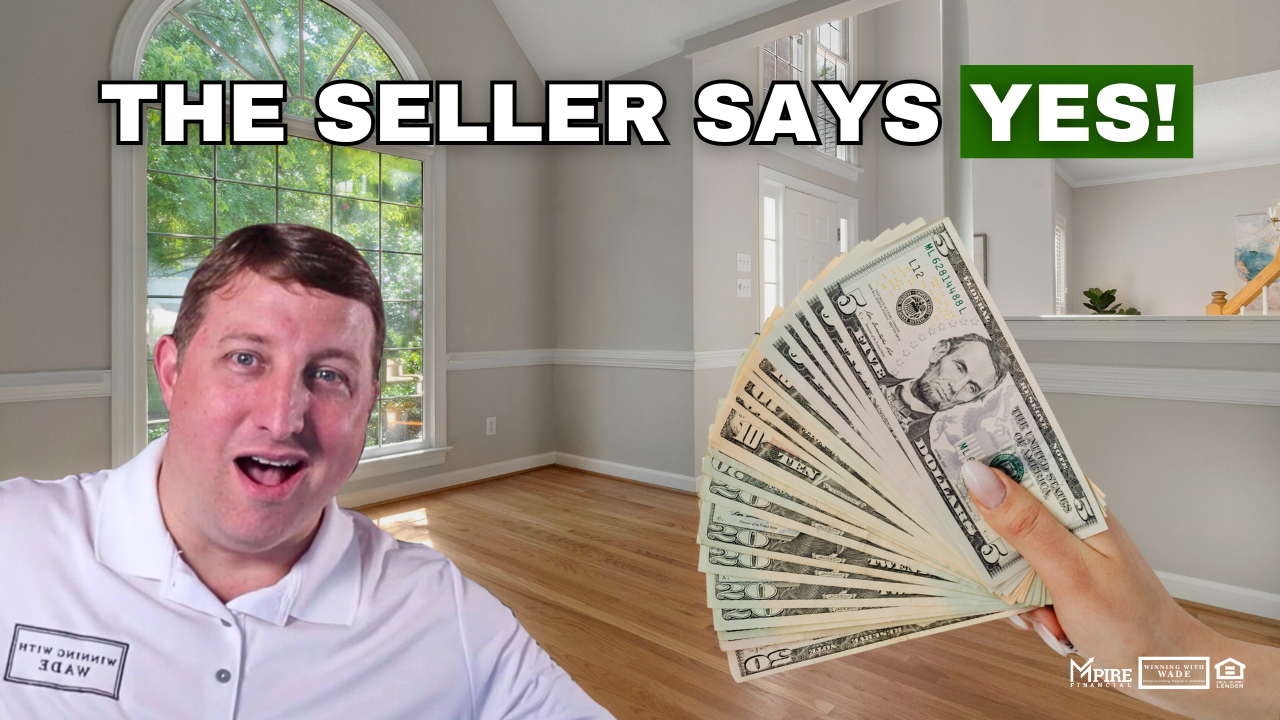
Seller concessions are how buyers shift that cost legally, within standard loan guidelines, without changing the loan amount or purchase price.
Understanding how they work, what the limits are by loan type, and how to ask for them correctly can be the difference between buying now and waiting another year to rebuild savings.
💰 Why Closing Costs Catch Buyers Off Guard
The homebuying conversation almost always centers on the down payment.
Buyers hear 3%, 3.5%, or 5%, build a savings plan around that number, and then encounter closing costs as a second major expense late in the process, after the property is chosen and the budget is already stretched.
Closing costs typically run 2% to 5% of the sales price.
On a $350,000 home, that is $7,000 to $17,500 due at closing on top of whatever was saved for the down payment.
Most buyers assume closing costs are just lender fees, but prepaids are the category that catches people off guard the most.
They include:
- Prepaid interest
- Homeowners insurance escrow
- Property tax escrow
—and on a recent loan estimate, prepaids alone added $2,800 on top of all other lender-related costs.
What Seller Concessions Are
Seller concessions are a negotiated credit in the purchase agreement where the seller contributes money toward the buyer’s closing costs and prepaids.
The buyer brings less cash to the closing table, the loan amount stays the same, and the purchase price does not change.
Seller concessions are a standard, disclosed, lender-approved transaction structure that must appear on the settlement agreement.
There is nothing unusual about requesting them; they are built into how many home purchases are structured.
📋 What Seller Concessions Can Cover
Seller concessions are not limited to lender fees.
Depending on the loan program, they can also be applied toward prepaid items tied to the transaction:
- Lender origination and processing fees
- Title-related charges
- Prepaid interest
- Property tax escrow
- Homeowners insurance escrow and other eligible prepaid items
A buyer who only planned for lender fees and then discovered thousands in prepaids can use seller concessions to offset those costs too, subject to the applicable loan rules.
Seller Concession Limits by Loan Type
There is no single universal limit.
The allowable amount depends on the loan type and, for conventional loans, the down payment size.
Knowing the ceiling before writing an offer is essential because the lender is already working from those numbers.
Conventional loans
The limit depends on the loan-to-value ratio, which is the relationship between the amount borrowed and the home’s value.
For most first-time buyers putting 3% to 5% down, the loan-to-value is above 90%, and the maximum seller concession is 3% of the sales price.
The 6% figure mentioned frequently applies only when the buyer puts 10% to 25% down.
On a $350,000 purchase with less than 10% down, the ceiling is $10,500.
FHA loans
FHA allows up to 6% toward closing costs and prepaids under HUD guidelines.
VA loans
VA financing allows 4% plus closing costs.
Because VA loans do not require a down payment for eligible borrowers, the right transaction structure can result in very little or potentially no cash out of pocket from the buyer for closing-related costs.
USDA loans
USDA allows up to 6% under USDA Rural Development guidelines.
Two rules that apply across every loan type
- Seller concessions are calculated on the lower of the sales price or appraised value, not the loan amount
- Seller concessions cannot exceed the buyer’s actual closing costs
Any unused portion does not come back to the buyer as cash.
Seller concessions are a way to offset real documented costs, not a rebate.
🚫 Why a Price Reduction Is Not the Same as Seller Concessions
A seller who drops the price by $9,000 and a seller who gives $9,000 in concessions can end up at the same net number, but the outcomes for the buyer are completely different.
Every $1,000 in price reduction lowers the monthly payment by roughly $7, so a $9,000 price cut reduces the payment by about $63 per month, while the buyer still has to cover the full closing costs.
Seller concessions remove cash from what the buyer has to bring to the table, which is a more direct solution for buyers whose main obstacle is upfront cash rather than monthly payment.
How to Ask for Seller Concessions the Right Way
Step 1: Get the loan estimate first
The concession amount has to be based on actual closing costs.
Seller concessions cannot exceed real documented costs, so the loan estimate is the starting point.
A number that is too low leaves money on the table, and a number that is too high cannot be used.
Step 2: Write a dollar amount in the offer
Asking for $9,200 is cleaner than asking for 3%.
A specific dollar amount looks intentional, aligns directly with the loan estimate, and is harder to object to in negotiation.
Step 3: Frame it as net neutral to the seller
The request should be centered on what the seller actually receives, not on the buyer’s cash situation.
The framing is: “We’re offering list price and asking the seller to contribute X dollars toward closing. Their net is the same.”
That sentence removes the awkwardness from the request because the seller’s check at closing does not change while the buyer’s cash obligation does.
Seller concessions are a structuring strategy. The right framing turns your agent’s ‘they’ll never go for it’ into a signed contract. Even so, the seller has to be willing and able to do this.” — Wade Betz, Winning With Wade | Mortgage Education and Strategy
Do Not Accept “The Seller Won’t Go for It” Without Pushing Back
Many buyers stop here.
They hear that the seller may reject the request, skip the concession entirely, and drain their savings at closing.
The better approach is to ask whether the issue is the request itself or how it is framed.
When the seller’s net stays the same, the conversation changes.
The goal is to structure the offer to solve the buyer’s cash problem while keeping the deal workable for the seller.
That does not mean every seller will agree, but many buyers eliminate the option before it is ever properly presented.
✅ Seller Concessions Checklist
Before writing an offer:
- Get the loan estimate and confirm the actual closing cost total
- Identify the concession limit for the specific loan type and down payment
- Write the concession as a dollar amount based on the loan estimate
- Confirm the amount does not exceed actual closing costs
- Frame the request around the seller’s net in the offer language
- Verify the concession is documented on the settlement agreement
📣 Frequently Asked Questions (FAQs)
Are seller concessions the same as a price reduction?
No. A price reduction lowers the loan amount and reduces the monthly payment by roughly $7 for every $1,000 reduced. Seller concessions reduce the cash needed at closing, which directly addresses the problem most first-time buyers are actually trying to solve.
What can seller concessions be used for?
Seller concessions can be applied toward eligible closing costs and prepaid items including lender fees, title charges, prepaid interest, property tax escrow, and homeowners insurance-related prepaids, subject to loan program rules.
How much can I request on a conventional loan?
For buyers putting less than 10% down, the cap is typically 3% of the sales price. Higher limits apply in conventional scenarios with larger down payments, so knowing the loan-to-value ratio before writing the offer matters.
How much can I request with FHA, VA, or USDA financing?
FHA allows up to 6%, USDA allows up to 6%, and VA allows 4% plus closing costs. The usable amount in each case still depends on actual eligible costs.
Can seller concessions exceed my actual closing costs?
No. Seller concessions cannot exceed the buyer’s documented closing costs, and any unused portion does not come back to the buyer as cash.
Should I ask for a percentage or a dollar amount?
A specific dollar amount is the cleaner choice because it aligns directly with the loan estimate, looks more intentional, and is easier to present in negotiation.
How should the request be framed in the offer?
Frame it around the seller’s net: “We’re offering list price and asking the seller to contribute X dollars toward closing. Their net is the same.”

About the Author
Wade Betz
Mortgage Broker at Winning WIth Wade · NMLS #280613
Wade has been a stalwart in the mortgage industry since 2006, dedicating himself to helping thousands of families navigate the complexities of home financing. With so much experience, he stands out as a leading mortgage originator in the Dallas-Fort Worth area.
Specializes in: DSCR Loans, VA Loans, Reverse Mortgages
Licensed in: AL, AZ, AR, CA, CO, CT, FL, GA, ID, IL, IN, KS, LA, MD, MI, MS, MT, NE, NJ, NM, NC, OH, OK, OR, PA, SC, TN, TX, VA, WA, WI
Related Posts