If you plan to use a HECM for Purchase to buy a newly built home,…
What to Expect When Your Conventional Loan Down Payment Is Below 20 Percent
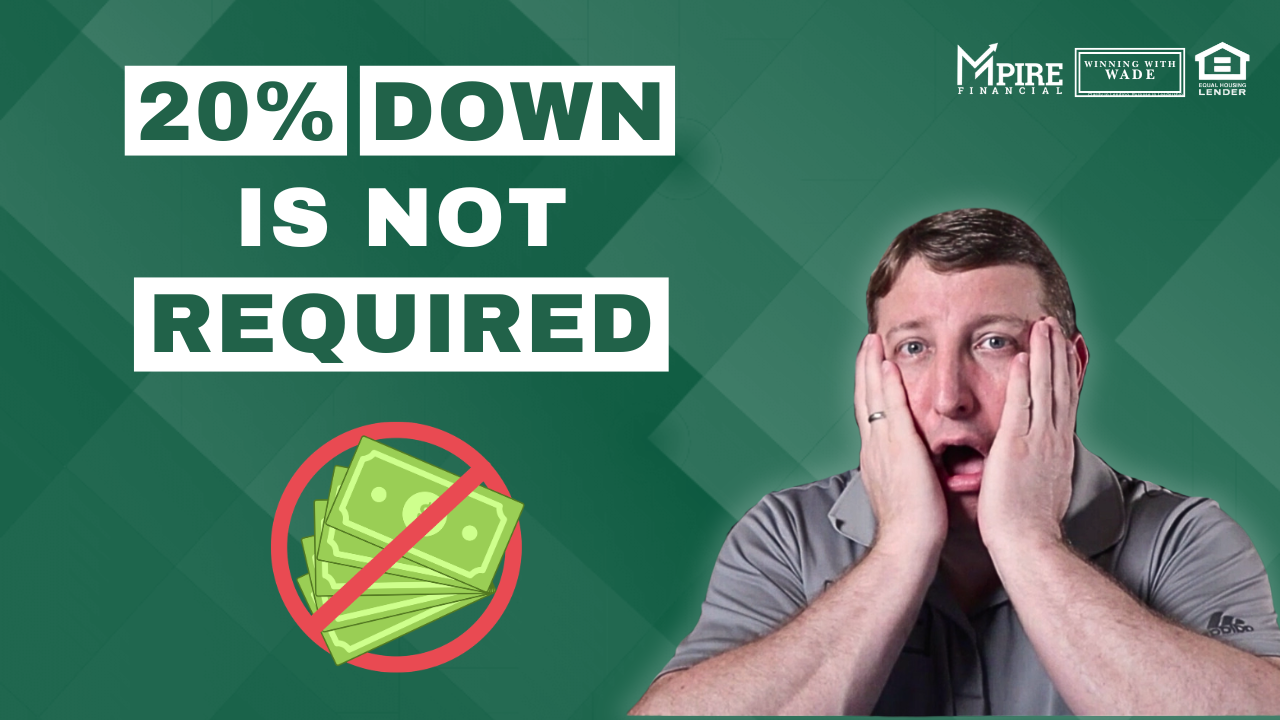
The 20 percent figure comes up in almost every home buying conversation, and most buyers hear it so many times it starts to sound like a requirement.
It is not.
Conventional loan down payment rules allow purchases with less than 20 percent down in many situations.
What changes is the structure of the loan, and understanding those changes is what turns a confusing number into a clear decision.
Where the 20 Percent Idea Comes From
The 20 percent benchmark became a common reference point for two reasons: it avoids mortgage insurance, and it gives the buyer a larger initial ownership stake in the home.
Those outcomes are appealing, so the number stuck.
It moved from lending conversations into family advice, online forums, and casual real estate talk.
Over time, it started being repeated without much explanation of what actually sits underneath it.
The more useful question is: what adjustments appear when the conventional loan down payment is smaller.
𐄷 How Lenders Evaluate Down Payment Size
When a buyer brings less than 20 percent to the table, the loan still has to pass underwriting.
- Income still needs to support the payment.
- Debts are still reviewed.
- Credit history is still evaluated.
- Assets still need to be verified.
What changes is how the loan is structured around a higher loan-to-value ratio, which is simply the percentage of the home’s value being financed.
A smaller conventional loan down payment means the lender is financing more of the purchase price, and that higher percentage influences mortgage insurance, rate adjustments, and how closely the overall file is reviewed.
Private Mortgage Insurance: The Most Noticeable Change
The most immediate structural change when a conventional loan down payment falls below 20 percent is private mortgage insurance, commonly called PMI.
PMI protects the lender if the loan defaults. It is not insurance for the homeowner.
It exists because the lender is taking on more risk when the loan covers a larger portion of the home’s value.
PMI is typically paid monthly as part of the housing payment, though it can sometimes be paid upfront or built into the rate.
The monthly cost depends on several inputs working together:
- Credit score
- Down payment percentage and loan-to-value ratio
- Loan amount
- Property type and occupancy classification
Because those inputs vary from buyer to buyer, PMI costs can look very different even on homes at similar price points. Including PMI in early payment estimates is what keeps the full monthly picture from feeling like a surprise later.
What the Full Monthly Payment Actually Includes
Many buyers start affordability planning with principal and interest, which is an important piece but not the complete picture.
A full monthly housing payment typically includes:
- Principal and interest
- Property taxes
- Homeowners insurance
- Mortgage insurance when required
- HOA or condo dues where applicable
When the conventional loan down payment is below 20 percent, the mortgage insurance line will likely be present.
Running early estimates that include all of those components makes budgeting more predictable and helps buyers decide whether the structure still feels comfortable.
Does the Interest Rate Change with a Smaller Down Payment?
On conventional loans, rates are built from multiple inputs:
- Credit profile
- Loan size
- Property type
- Occupancy
- Market conditions
- Loan-to-value ratio.
A smaller conventional loan down payment can be one of those inputs.
Higher loan-to-value ratios can bring modest pricing adjustments within the rate structure.
That does not mean one factor determines the outcome on its own, but it does mean rate quotes are assembled from several pieces working together, and down payment size is one of them.
Consider two buyers purchasing the same home at the same price:
- Buyer A puts 20 percent down, carries no PMI, and receives a rate based on that lower loan-to-value
- Buyer B puts 5 percent down, carries PMI, and may see a modest rate adjustment tied to the higher loan-to-value
Each element can seem manageable on its own. Layered together, they create a noticeably different monthly payment.
💰 Does a Smaller Down Payment Make Approval Harder?
Underwriting still reviews the entire file regardless of the conventional loan down payment amount.
Income stability, employment history, debt ratios, credit patterns, reserves, and property eligibility all matter the same way.
When the down payment is smaller, underwriters may review certain areas more closely:
- Asset verification and documentation
- Reserve requirements
- Appraisal and comparable sales review
- Credit history depth and payment patterns
A smaller down payment does not automatically prevent approval.
It means the rest of the file needs to support the requested structure, and early lender conversations give time to build the strongest version of the application before contract deadlines create pressure.
How and When PMI Can Be Removed
One of the most common misconceptions about conventional loan down payment structures is that mortgage insurance lasts forever.
On conventional loans, PMI is often temporary.
Removal typically becomes available through:
- Reaching a 20 percent equity position through scheduled principal payments
- Home value appreciation that pushes equity above program thresholds
- A new appraisal when guidelines allow and sufficient equity is documented
Understanding the removal path helps frame PMI as an early-years cost rather than a permanent addition to the payment.
That context makes a conventional loan down payment below 20 percent feel more manageable when the overall structure makes sense for the buyer’s situation.
Putting less than 20 percent down can work well for many buyers. What matters is understanding what changes in the structure so that the decision comes from planning rather than assumption.” — Wade Betz, Winning With Wade | Mortgage Education and Strategy
🚩 Common Myths Worth Clearing Up
- Believing 20 percent is always required on a conventional loan. Many conventional loan down payment options allow smaller amounts. The structure changes, not the ability to purchase.
- Assuming PMI lasts forever. PMI is frequently removable once equity thresholds are met through principal reduction or appreciation.
- Expecting the interest rate to be identical at every down payment level. Higher loan-to-value ratios can bring modest pricing adjustments.
- Looking only at principal and interest when estimating the payment. Taxes, insurance, PMI, and HOA dues often push the total higher than initial estimates if they are not included early.
- Waiting until after a contract is signed to explore detailed scenarios. That is the most stressful version of this conversation and the easiest one to avoid.
Planning Questions to Work Through Early
Before committing to a conventional loan down payment amount, these questions tend to bring useful clarity:
- How much cash do I want remaining after closing?
- What monthly payment range feels sustainable from month to month?
- How long do I expect to own this home?
- How comfortable am I carrying PMI during the early years?
- Do I expect income changes in the near future?
- Would waiting to save more meaningfully change the loan structure?
These conversations are easiest before offers are written. That timing creates room to evaluate scenarios calmly rather than reactively.
Checklist: Preparing for a Down Payment Below 20 Percent
Before writing offers, work through these steps:
- Request scenario-based estimates from a lender that include PMI, taxes, insurance, and HOA
- Gather documentation for income, assets, and credit early
- Compare payment structures at different down payment levels to see the trade-offs clearly
- Confirm reserve expectations with your lender
- Understand the PMI removal process and timeline before closing
- Set a monthly payment target that accounts for all housing costs, not just principal and interest
📣 Frequently Asked Questions (FAQs)
Is 20 percent always required for a conventional loan down payment?
No. Conventional loans can be structured with smaller down payments in many situations. The loan structure changes when the down payment is below 20 percent, with mortgage insurance commonly added and underwriting reviewing the overall file more closely.
How does PMI affect my monthly payment?
PMI adds a monthly cost to the housing payment when the conventional loan down payment is under 20 percent. The amount depends on credit score, loan-to-value ratio, loan amount, and property type. Including it in early estimates gives a more accurate picture of the full monthly obligation.
Can PMI be removed after closing?
In most cases, yes. PMI on conventional loans is removable once sufficient equity is reached through principal payments or home value appreciation. The specific process and thresholds depend on the loan program and lender guidelines.
Will my interest rate be higher with a smaller down payment?
Possibly. Rates on conventional loans are influenced by multiple factors including loan-to-value ratio. A smaller conventional loan down payment can contribute to a modest rate adjustment, though credit score, loan size, property type, and market conditions also play significant roles.
Does a smaller down payment make loan approval impossible?
No. Approval depends on the overall strength of the file. With a smaller conventional loan down payment, underwriters often review assets, reserves, and credit more closely, but many borrowers are successfully approved with well-documented applications.
What should I ask my lender before deciding on a down payment amount?
Ask for full payment breakdowns at different down payment levels including principal and interest, taxes, insurance, PMI, and HOA. Ask about reserve requirements, documentation expectations, and the timeline and process for PMI removal. Those conversations are most valuable before an offer is written.

About the Author
Wade Betz
Mortgage Broker at Winning WIth Wade · NMLS #280613
Wade has been a stalwart in the mortgage industry since 2006, dedicating himself to helping thousands of families navigate the complexities of home financing. With so much experience, he stands out as a leading mortgage originator in the Dallas-Fort Worth area.
Specializes in: DSCR Loans, VA Loans, Reverse Mortgages
Licensed in: AL, AZ, AR, CA, CO, CT, FL, GA, ID, IL, IN, KS, LA, MD, MI, MS, MT, NE, NJ, NM, NC, OH, OK, OR, PA, SC, TN, TX, VA, WA, WI
Related Posts