Condo financing works differently from financing a single-family home, and most buyers find out why…
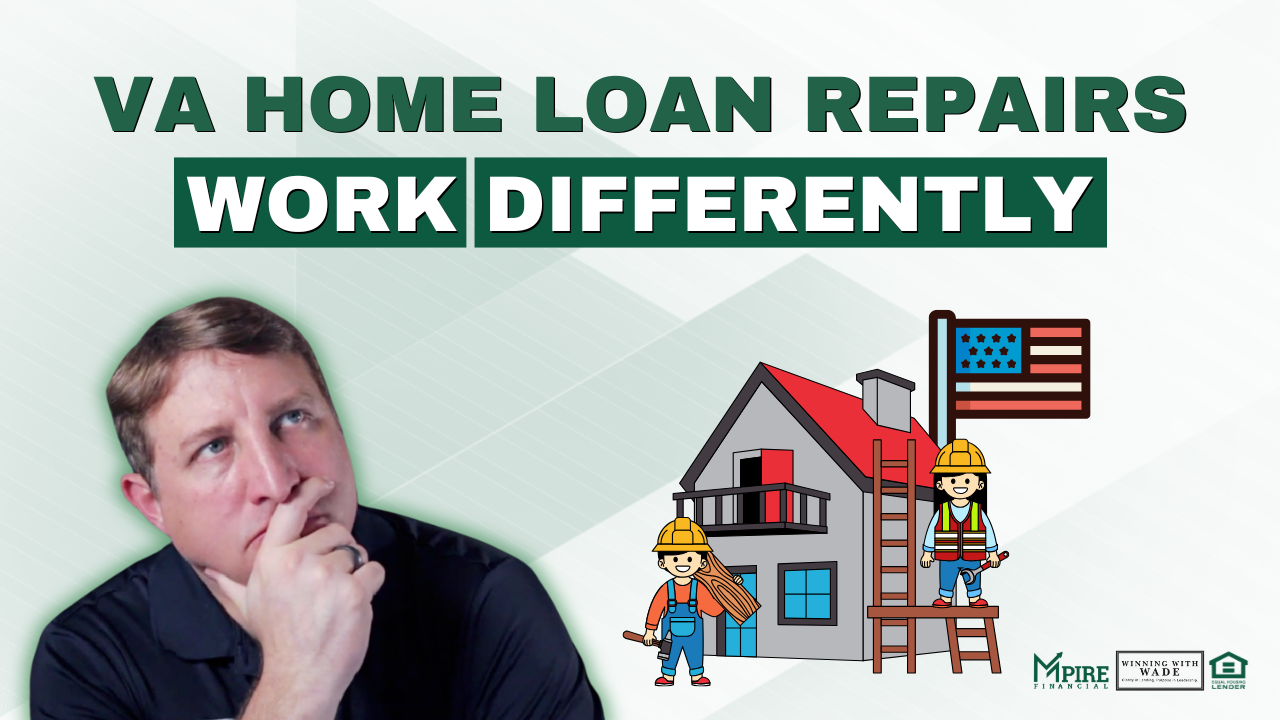
VA Loan Repairs and Renovations Explained
Finding a home that fits your budget and your location is hard enough without wondering whether a needed repair will kill the deal.
Veterans using a VA loan often assume the property has to be close to perfect before the loan will work.
That assumption causes buyers to walk away from homes that would have been entirely manageable with the right plan in place.
VA loan repairs are not a single category.
Some work has to finish before closing, some moves through a limited post-closing process when the situation qualifies and the lender supports it, and some requires a different loan structure altogether.
Knowing which lane your situation falls into before you write an offer is what keeps the process predictable.
Why the Word “Repairs” Creates So Much Confusion
When buyers say repairs, they mean very different things.
They could mean:
- Peeling paint
- A missing handrail
- The roof nearing the end of its life
- A full kitchen remodel
- New flooring
- or even moving walls
A VA loan does not treat those situations the same way, and understanding that distinction early is what prevents the kind of surprises that surface after a contract is already signed.
✅ VA Minimum Property Requirements
The VA built its loan program around one core expectation: the home a veteran purchases must be safe, sound, and suitable for occupancy.
The Minimum Property Requirements enforce that standard.
Appraisers use them to evaluate whether a home qualifies, and they have nothing to do with style or updates. They exist to confirm the home is livable and safe in a basic, practical sense.
Common items on that baseline include:
- A roof that keeps out water and weather
- Heating that can reasonably support occupancy
- Electrical systems that function safely
- Water supply and sewage that work as intended
- Structures that appear stable and sound
- Access that allows normal entry to the home
Most homes clear this baseline without any issue.
When a home falls short, the VA requires those conditions to be resolved and documented before the loan can close.
Three Categories Every Buyer Should Understand
The clearest way to approach VA loan repairs is to sort the work into three separate categories before moving forward.
Required Repairs
Required repairs are conditions that affect safety, structural integrity, or habitability and fall below the VA’s minimum property requirements.
The home must resolve them to qualify.
Common examples include:
- Roof leaks or significant roof damage
- Major electrical hazards or exposed wiring
- Inoperative heating in a climate that requires it
- Sewage or plumbing failures
- Structural issues like sagging floors or compromised supports
When an appraiser identifies these items, they become conditions of the loan.
Required VA loan repairs must be completed before closing.
The only exception is a repair escrow, which lenders rarely offer.
Plan for pre-closing completion unless the lender confirms in writing that it will not.
Optional Improvements
Optional improvements are upgrades the buyer wants for comfort, function, or personal preference. They do not affect safety or habitability, nor do they affect loan eligibility.
These typically include:
- Kitchen or bathroom updates for style
- Flooring replacement for aesthetic reasons
- Cosmetic painting or trim work
- Fixture or finish changes
- Non-structural layout changes
Optional improvements can be handled after closing using personal funds, a home equity product, or a renovation loan that was planned from the start.
They are not VA loan repairs in the way underwriting uses that term.
Renovations and Major Upgrades
Large-scale renovations introduce construction variables that a standard VA purchase loan is not structured to absorb.
- Budgets shift,
- timelines change,
- contractors vary,
- and the finished product can differ from the original plan.
None of that makes renovations a bad idea. It means they require a deliberate financing structure, more documentation, and a longer timeline than a standard purchase.
If substantial work is part of the plan, the time to address that is before an offer is written, not after a contract is signed.
🔍 The Appraisal Is Where This Becomes Real
The VA appraiser has two jobs: establish an opinion of value and evaluate whether the home meets the VA’s minimum property requirements.
When deficiencies are identified, the transaction typically moves into one of three lanes:
- The seller agrees to complete the required repairs before closing.
- The buyer and seller negotiate how those repairs will be handled in the contract.
- A repair escrow is used to hold funds at closing for narrowly defined post-closing repairs when the situation qualifies, and the lender supports it.
That third option is where buyers often hear something vague like “sometimes you can close and fix it later.”
That can be true in limited cases, but it is not automatic and not available for every repair type.
The safest approach is to plan as though VA loan repairs must be completed before closing unless the lender confirms otherwise.
How Repair Escrows Actually Work
A repair escrow holds funds back at closing to cover specific repairs completed after the buyer takes possession.
The concept is straightforward, but the execution has strict requirements.
A typical repair escrow involves:
- A clear, itemized list of the repairs being completed
- A documented cost estimate or contractor bid
- A defined completion timeline
- Verification that the work was completed correctly before funds are released
This is a controlled process meant to keep a transaction moving when pre-closing completion is genuinely difficult due to timing.
It also adds complexity, which is why not every lender offers it, and not every property situation qualifies.
When Renovation-Style VA Financing Is the Right Path
VA lending offers options for repairs and improvements beyond the standard purchase structure.
These loans are designed to finance both the purchase and approved renovations, often using an as-completed value so the loan reflects the home’s value after the work is done.
Expect more documentation when VA loan repairs include a renovation component:
- Contractor credentials and licensing verification
- A detailed written scope of work
- Itemized cost breakdowns
- Stage inspections before each draw release
- Longer timelines built into the plan from the start
That process protects the veteran from paying for incomplete or poor-quality work and keeps the loan stable through the construction period.
The longer timeline is is part of the trade-off when improvements are built into the financing.
Energy Improvements and Targeted Upgrades
Energy-related upgrades, such as insulation, efficient HVAC systems, and windows, can sometimes be included in a VA loan when they are part of a documented, intentional financing plan.
These improvements can reduce long-term utility costs and improve the home’s livability, making them worth raising early in the conversation.
Trying to add energy efficiency upgrades at the end of a standard purchase process rarely works.
Raising the goal early gives the loan structure room to support it.
VA loan repairs are less complicated than most buyers expect once the categories are clear. Required repairs, optional improvements, and renovation projects each have their own path. The mistake is treating them as one thing.” — Wade Betz, Winning With Wade | Mortgage Education and Strategy
🚩 Common Misunderstandings Worth Clearing Up
A few assumptions create the most friction in this process, and addressing them early tends to make everything smoother.
- Assuming the buyer can roll any work they want into a standard VA loan. Only documented renovation financing supports built-in improvements beyond the baseline.
- Treating cosmetic updates as required repairs. Cosmetic items do not affect VA loan repair requirements unless they relate directly to safety or habitability.
- Expecting a repair escrow to be available without confirming it with the lender. Escrows are limited and lender-dependent. Assume repairs must be completed before closing unless confirmed otherwise.
- Waiting until after a contract is accepted to ask whether renovation financing is needed. Renovation loans require documentation and planning that have to begin before an offer is written.
Planning Questions to Work Through Before You Write an Offer
When a home needs work, slowing down to sort the issues before getting emotionally attached to the property is one of the most useful things a buyer can do.
These questions bring clarity early:
- Which items affect safety, structure, or habitability?
- Which issues will a VA appraiser likely flag as minimum property requirement violations?
- What improvements are optional and can wait until after closing?
- Which upgrades are essential to the plan and require renovation financing?
- What is a realistic timeline for the work, and how does that affect closing?
These conversations are far easier before signing a contract. Once deadlines start compressing, the options narrow and the decisions become more stressful.
Checklist: VA Loan Repairs Planning Before an Offer
Before writing an offer on a home that needs work:
- Identify items that affect safety or habitability
- Contact the lender early to confirm whether repair escrows or renovation financing are available
- Get at least one contractor estimate if significant work is likely
- Ask the agent to include inspection contingencies that allow time for repair planning
- Document everything: itemized costs, contractor credentials, and clear scopes of work
📣 Frequently Asked Questions (FAQs)
What counts as a required repair under VA loan rules?
Required repairs are items that affect safety, structural integrity, or habitability and fall below the VA’s minimum property requirements. Roof leaks, major electrical hazards, inoperative heating, sewage failures, and structural defects are common examples. The loan cannot close until those VA loan repairs are resolved.
Can a VA loan include cosmetic updates?
Cosmetic updates like paint, flooring for style, or fixture changes are optional improvements and do not qualify as VA loan repairs that affect eligibility. A standard VA purchase loan will not finance them. A renovation-style VA loan can include them when the plan is documented and structured before closing.
What is a repair escrow, and when is it available?
A repair escrow holds funds at closing to pay for narrowly defined repairs the buyer completes after taking possession. It requires a clear scope, cost estimates, a timeline, and verified completion before funds release. Lenders rarely offer them. Plan to complete VA loan repairs before closing unless the lender confirms an escrow in writing.
Are there VA loans that finance renovations?
Yes. VA renovation financing allows approved improvements to be built into the loan amount, often using an as-completed value. Contractor credentials, a detailed scope of work, staged inspections, and draw schedules are all required. Expect more documentation and a longer timeline when renovation work is part of the VA loan repairs plan.
Will a VA appraiser always require repairs?
No. The VA appraiser checks the property against minimum property requirements and establishes value. Most homes clear that review without any required VA loan repairs because they already meet safety and habitability standards. The appraiser flags repairs only when a deficiency exists.
How should I approach a home with visible deferred maintenance?
Sort visible issues into required versus optional categories before making an offer. Contact the lender early about repair escrows or renovation financing, and get contractor estimates if major work is likely. Waiting until after signing a compresses the timeline, limits the options, and turns VA loan repairs into a last-minute problem instead of a manageable plan.

About the Author
Wade Betz
Mortgage Broker at Winning WIth Wade · NMLS #280613
Wade has been a stalwart in the mortgage industry since 2006, dedicating himself to helping thousands of families navigate the complexities of home financing. With so much experience, he stands out as a leading mortgage originator in the Dallas-Fort Worth area.
Specializes in: DSCR Loans, VA Loans, Reverse Mortgages
Licensed in: AL, AZ, AR, CA, CO, CT, FL, GA, ID, IL, IN, KS, LA, MD, MI, MS, MT, NE, NJ, NM, NC, OH, OK, OR, PA, SC, TN, TX, VA, WA, WI
Related Posts