
Most homeowners who look into paying off student loans with home equity walk away too…
Loan Estimate Breakdown: What to Read, Compare, and Negotiate
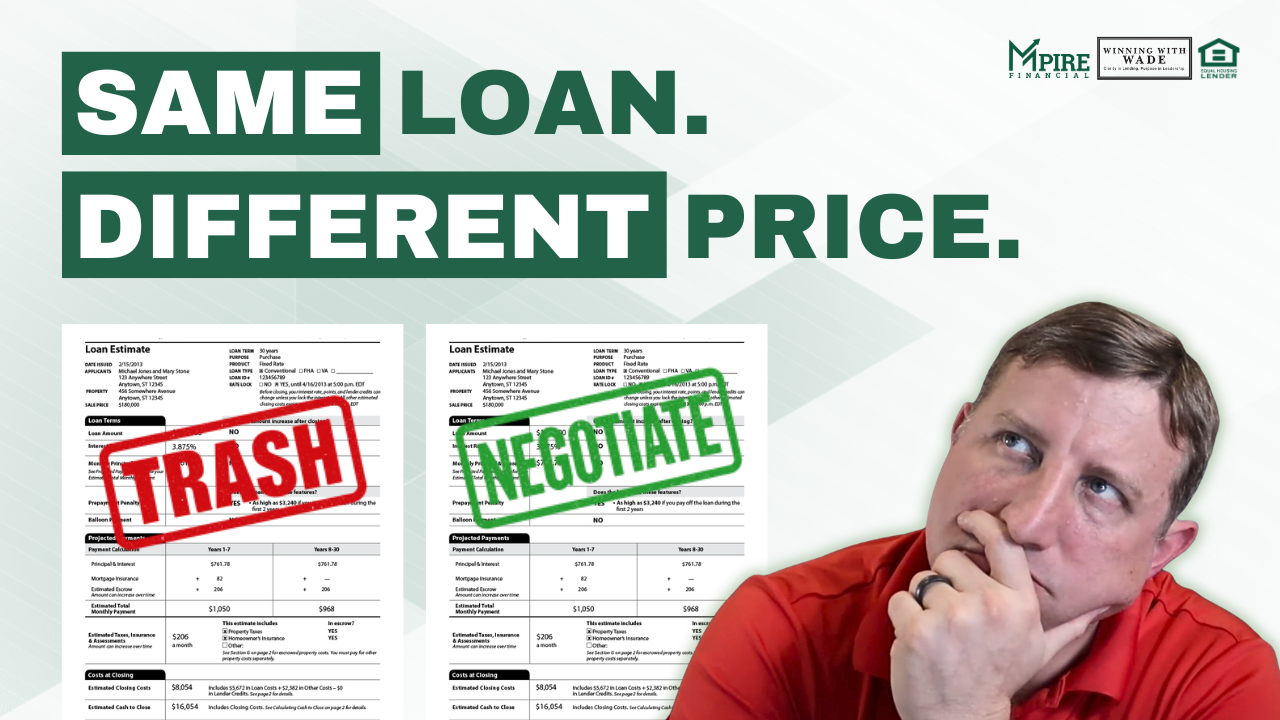
When you apply for a mortgage, federal law requires the lender to send a loan estimate within three business days.
Most homebuyers look at the payment, maybe glance at the rate, and move on, but that is a missed opportunity.
A loan estimate is a standardized comparison tool designed to help you line up offers from multiple lenders, spot meaningful differences, and negotiate better terms before you commit.
Used correctly, it can save money both upfront and over the life of the loan.
📝 What a Loan Estimate Is
A loan estimate is a three-page standardized mortgage form.
Every lender uses the same layout, which is what makes it valuable.
Instead of decoding different worksheets or lender-specific proposals, you can compare the same categories side by side.
The form covers:
- Loan amount and loan type
- Interest rate and whether it is fixed or adjustable
- Estimated monthly payment
- Estimated closing costs by category
- Whether there is a prepayment penalty or balloon payment
- Taxes and insurance collected through escrow
- Cash needed at closing
Receiving a loan estimate does not mean you are approved, and it does not commit you to that lender. It is an offer.
Many buyers feel pressure to keep moving with the first lender who responds, but there is no obligation to do so.
Collecting multiple loan estimates before deciding is the better move.
Verify the Basics Before Comparing
Before comparing rates or fees, confirm each loan estimate is built on the same foundation.
A mismatched loan amount or property address makes the comparison meaningless and can cause problems later.
Check immediately:
- Your name
- The property address
- The loan amount
- The loan type
Also, check page one to see whether the interest rate is locked.
Some lenders issue the loan estimate with a locked rate, while others do not lock until you formally express intent to proceed.
If the rate is not locked, ask:
- When do you typically lock rates?
- Is there a fee to lock?
- How long does the lock last?
- What happens if closing is delayed past the lock expiration?
If anything on the loan estimate differs from what was discussed with the loan officer, ask for an explanation before moving forward.
🔍 How to Compare Loan Estimates
The real power of a loan estimate lies in the side-by-side comparison. Since the format is standardized, every lender can be evaluated on the same terms.
Interest rate and APR
The interest rate is the cost of borrowing money.
The APR, or annual percentage rate, includes the interest rate plus points, broker fees, and certain other charges expressed as a yearly rate.
APR is almost always higher than the note rate and gives a broader view of total loan cost than the rate alone.
Points
Points are fees paid to the lender.
One point equals one percent of the loan amount, and paying points upfront typically lowers the interest rate.
A point sounds abstract until it is translated into actual cash out of pocket, so be sure to ask lenders to quote points as a dollar amount.
Origination charges and lender fees
Section A of the loan estimate covers origination charges, including underwriting fees, processing fees, and other lender-controlled costs.
Two lenders can offer the same loan product and still charge very different origination fees.
Ask directly whether any of these charges can be reduced or waived.
Third-party fees and closing costs
Some closing costs are less negotiable because they are set by third parties, including:
- Title companies
- Appraisers
- Government recording offices
The loan estimate separates lender-controlled charges from third-party charges so you can see exactly where differences come from.
Cash due at closing
The cash due at closing reflects the total amount needed to close, including down payment and closing costs, minus any credits.
A lower rate can still require a larger upfront payment.
Comparing this number across loan estimates gives a realistic picture of what each option costs on day one.
⚠️ Loan Features That Deserve Extra Attention
The loan estimate also flags features that can materially change the risk of the loan.
Adjustable Rate: The interest rate can change after an initial fixed period, which means the monthly payment can increase.
Prepayment Penalty: Selling or refinancing before a certain period may trigger additional fees to the lender.
Balloon Payment: A large lump sum is due at the end of the loan term. If that amount cannot be paid or refinanced, the consequences can be serious.
Negative amortization: The loan balance can grow over time rather than shrink, which is a significant structural difference from a standard mortgage.
None of these features automatically makes a loan wrong, but each one changes the risk profile in ways that deserve a clear explanation before committing.
Why Multiple Loan Estimates Give You Leverage
Lenders can price the same loan differently for borrowers with identical qualifications.
Shopping with only one lender leaves no benchmark for whether the pricing is competitive.
When multiple loan estimates are in hand, the dynamic changes because you are no longer asking a lender for a favor.
Now, you are asking them to compete.
If one lender offers better pricing than another, bring the competing loan estimate to your preferred lender and ask what they can do.
A specific written offer with better terms is a far stronger negotiating position than a vague statement that someone else quoted lower.
Practical questions to ask:
- Can you match or beat this rate?
- Can you reduce or waive any origination fees?
- Is there flexibility in the points structure?
Many buyers never ask these questions, which means they never find out whether better terms were available.
A rate out of context of fees is misleading at best. Shopping multiple lenders and comparing full loan estimates is one of the most important things a first-time buyer can do.” — Wade Betz, Winning With Wade | Mortgage Education and Strategy
✍🏻 Get the Rate Lock in Writing
Once you have chosen a lender, get the rate lock confirmed in writing before moving forward.
The written confirmation should clearly state:
- The locked interest rate
- How long the lock lasts
- The number of points included
A locked rate protects against market movement before closing.
If rates fall after locking, ask whether the lender offers any float-down flexibility. Some will work with you on this.
The Loan Estimate Has an Expiration Window
If you do not express intent to proceed within 10 business days of receiving a loan estimate, the lender can treat the application as incomplete and close it out.
Coming back later may mean starting over with a new loan estimate and potentially different terms.
A good process looks like this:
- Collect multiple loan estimates
- Verify the details on each one
- Compare rate, APR, points, fees, and cash due at closing
- Ask questions about any unclear terms or risk features
- Negotiate using the strongest competing offer
- Choose a lender within the applicable timeframe
- Get the rate lock confirmed in writing
If more time is needed, communicate with the lenders.
Disappearing without notice is what leads to expired applications and unnecessary restarts.
✅ Loan Estimate Review Checklist
Before choosing a lender:
- Confirm borrower name, property address, loan amount, and loan type on each estimate
- Check whether the rate is locked
- Compare interest rate and APR across all offers
- Review points in dollar terms, not just percentages
- Examine origination charges in Section A
- Separate lender-controlled fees from third-party fees
- Compare total cash due at closing
- Look for adjustable rate terms, prepayment penalties, balloon payments, or negative amortization
- Use competing offers to negotiate
- Get the rate lock confirmed in writing before proceeding
📣 Frequently Asked Questions
Does receiving a loan estimate mean I am approved?
No. A loan estimate outlines proposed terms based on information provided, but it is not a final approval.
Am I committed to a lender once they send a loan estimate?
No. Receiving a loan estimate does not commit you to that lender. The commitment happens when the final closing documents are signed.
What should I compare first on a loan estimate?
Start by confirming the basic loan details match across all offers. Then compare interest rate, APR, points, origination charges, and cash due at closing.
Is APR more important than the interest rate?
APR is more comprehensive. It reflects the broader loan costs by including certain fees alongside the interest rate, making it more useful for comparing lenders.
Can I negotiate fees on a loan estimate?
Some fees can be negotiated, particularly lender-controlled charges such as origination fees. Third-party charges are generally less flexible, but asking is always worth doing.
What happens if my rate is not locked?
An unlocked rate can change before closing. Ask when the lender locks rates, whether there is a fee, how long the lock lasts, and what happens if closing is delayed.
How long do I have to respond to a loan estimate?
Expressing intent to proceed within 10 business days is important. After that window, the lender can close out the application, and restarting may mean receiving a new estimate with updated terms.

About the Author
Wade Betz
Mortgage Broker at Winning WIth Wade · NMLS #280613
Wade has been a stalwart in the mortgage industry since 2006, dedicating himself to helping thousands of families navigate the complexities of home financing. With so much experience, he stands out as a leading mortgage originator in the Dallas-Fort Worth area.
Specializes in: DSCR Loans, VA Loans, Reverse Mortgages
Licensed in: AL, AZ, AR, CA, CO, CT, FL, GA, ID, IL, IN, KS, LA, MD, MI, MS, MT, NE, NJ, NM, NC, OH, OK, OR, PA, SC, TN, TX, VA, WA, WI
Related Posts